
Best Fertilizer for Trees: Stakes, Spikes, and Granular Options
Most established trees on residential properties do not need regular fertilizing. A tree growing in reasonably healthy soil with adequate mulch to preserve organic matter is typically meeting its own nutrient needs through the decomposition cycle. Fertilizing becomes genuinely beneficial in specific circumstances: a tree showing signs of nutrient deficiency, a tree in compacted or nutrient-poor soil, a newly planted tree being established, or a mature tree being managed for maximum fruit or flowering output.
When fertilizing is appropriate, matching the product type to the situation determines whether the investment produces a real benefit.
NPK Ratios: What Trees Actually Need
Trees have different nutrient priorities than lawn grass. Lawn fertilizers are high in nitrogen to drive rapid green growth. Trees benefit from a more balanced or nitrogen-moderated ratio that supports root development, structural wood production, and overall health without pushing excessive vegetative growth that creates soft, disease-susceptible tissue.
A general slow-release tree fertilizer in the 10-8-6 to 12-4-8 ratio range provides adequate nitrogen without overstimulating growth. Micronutrients including iron, manganese, and zinc matter for trees in high-pH soils where these elements become locked up and unavailable.
For acid-loving trees including oaks, birch, and fruit trees, a fertilizer formulated for acid-loving plants or a sulfur-containing product that lowers soil pH while feeding may be more appropriate than a standard balanced blend.
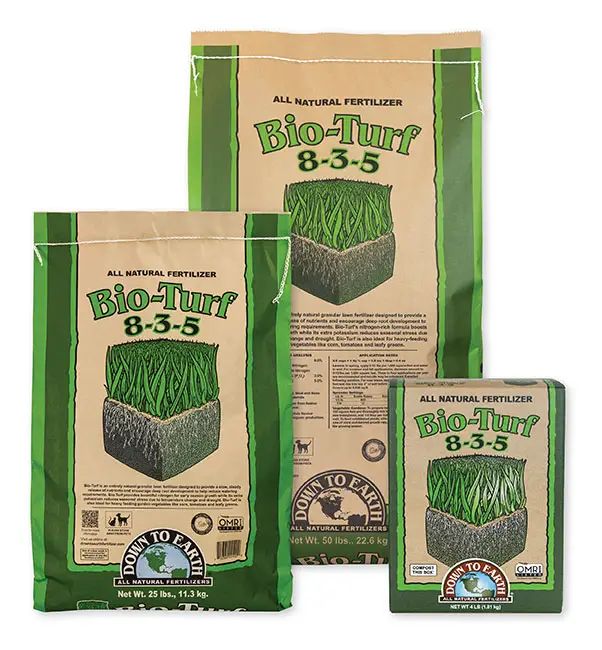
Down to Earth Bio-Turf is an all-natural 8-3-5 organic fertilizer, OMRI listed for use in organic production. It helps encourage deep root development to support greener, stronger growth while reducing watering needs and stress from heat or drought. Ideal for lawns, landscape ornamentals, and heavy-feeding garden vegetables and flowerbeds.
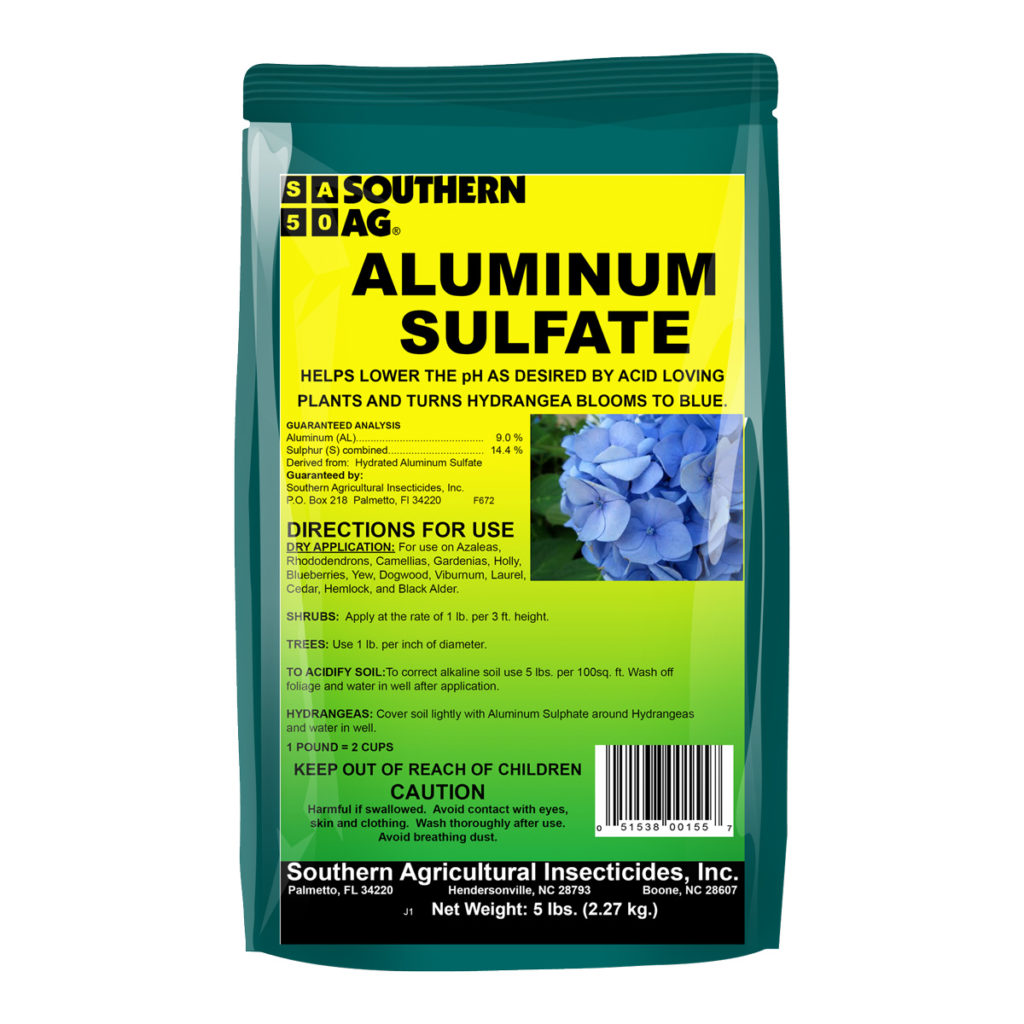
Southern Ag Aluminum Sulfate is a soil acidifier that helps lower pH and corrects high alkalinity, making it ideal for acid-loving plants. It’s great for hydrangeas and other shrubs and trees that prefer acidic conditions, including rhododendrons, blueberries, azaleas, and more. Broadcast evenly and wash off foliage, then water after application.
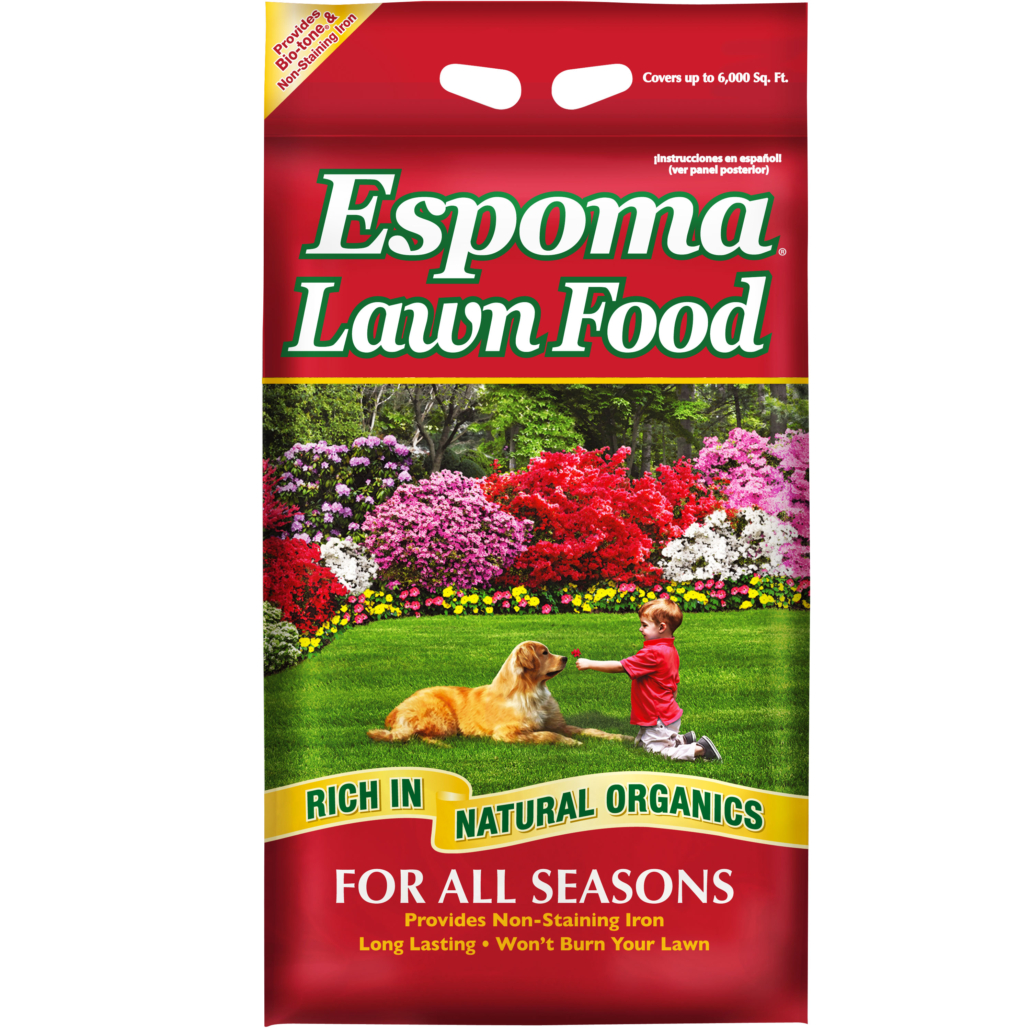
Espoma Lawn Food for All Seasons 15-0-5 provides slow-release, long-lasting nitrogen to help support a greener lawn year-round. Enhanced with iron for deep green color, it helps turn yellow lawns back to green and won’t stain concrete, sidewalks, or driveways. Safe for cool and warm season grasses, it applies in spring, summer, and fall with a drop or broadcast spreader.
Fertilizer Forms Compared
Granular fertilizers broadcast over the root zone are the most cost-effective form for large trees. Slow-release granular formulations release nutrients over three to six months, reducing the risk of nutrient runoff and providing a sustained supply. Apply granular fertilizer by broadcasting it evenly under the canopy from the trunk out to the drip line, then water in thoroughly. Do not pile granular fertilizer against the trunk.
Fertilizer stakes and spikes are compressed nutrient rods driven into the soil at intervals around the drip line. They provide a localized nutrient source that dissolves slowly with soil moisture. Convenient for small trees and for targeting the root zone without surface broadcasting. Less even distribution than granular for large trees with extensive root systems.
Liquid concentrates and foliar sprays deliver nutrients rapidly but require more frequent application and produce shorter-duration effects than slow-release forms. Useful for addressing specific deficiencies quickly, particularly micronutrient deficiencies that present as leaf yellowing.
Deep-root fertilizing uses a soil injector to deliver liquid fertilizer under pressure directly into the root zone. This approach bypasses compacted surface soil and delivers nutrients where tree roots are most active. Best suited to trees in heavily compacted soil where surface-applied fertilizer reaches the root zone poorly.
Top Product Picks
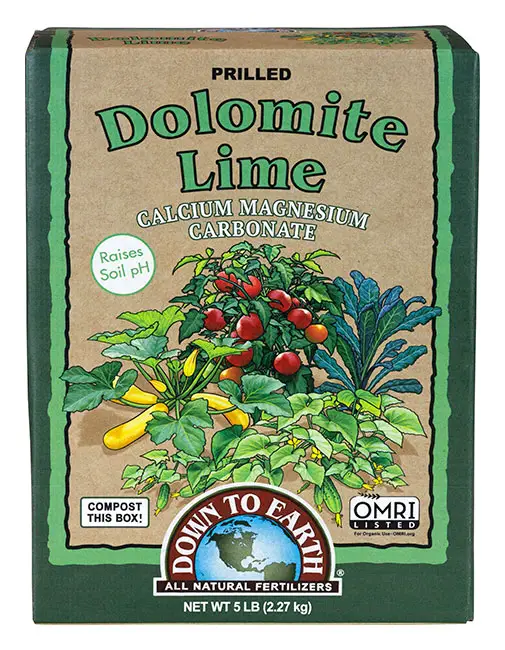
Down To Earth Organic Prilled Dolomite Lime helps raise acidic soil pH for better nutrient uptake and healthier vegetable gardens. Its rich calcium and magnesium support strong cell walls, root growth, and overall plant performance. OMRI listed for organic use, the prilled granules spread easily and act quickly while improving soil structure and microbial activity.
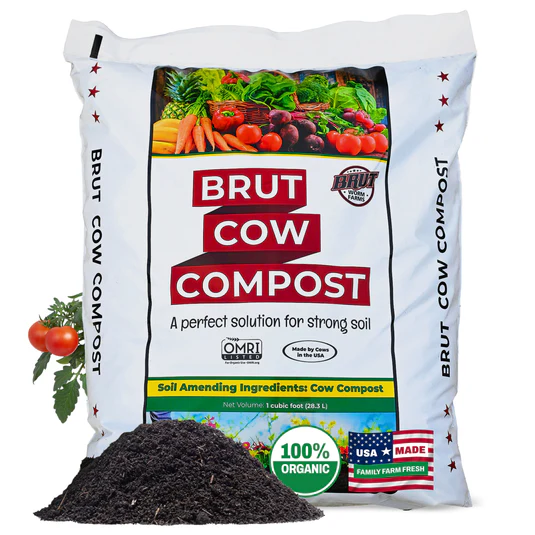
Brut Cow Compost is a nutrient-rich organic soil amendment made from 100% pure, thoroughly composted cow manure. It enriches soil with nitrogen, calcium, and iron, supports beneficial microbial life, and helps plants produce stronger growth. Odor-free and gentle on roots, it can be used for vegetables, flowers, lawns, shrubs, and indoor plants as a top dressing or mixed into garden and potting soil.
Jobe’s Organics Tree Fertilizer Spikes (16-4-4)
A slow-release organic spike formulation well suited to deciduous shade trees. The 16-4-4 ratio emphasizes nitrogen for leaf and canopy development. Biozome organisms in the formulation support soil microbial activity. Drive spikes at the drip line per package instructions. Good option for homeowners who want a simple, clean application.
Espoma Tree-Tone (6-3-2)
A lower-nitrogen organic granular formulation with a broad micronutrient profile. The restrained nitrogen level suits mature established trees better than high-nitrogen products. The organic base feeds soil biology as well as the tree. Widely available and well regarded for long-term tree health support.
Scotts Tree & Shrub Continuous Release (27-3-3)
A synthetic slow-release granular product for homeowners who want fast visible results. The high nitrogen ratio drives canopy growth quickly. Better suited to young trees being established than to mature specimens where excessive growth is not the goal. Apply at half the label rate for mature trees in healthy soil.
Nelson NutriStar Tree & Shrub (16-4-8)
A balanced granular blend with a useful potassium level for root and structural development. The 16-4-8 ratio provides good all-round nutrition for most deciduous tree species. Extended release formula. Good value for the coverage area.
Timing
Apply tree fertilizer in early spring before growth begins, or in late fall after leaf drop when nutrient uptake by roots continues even after the canopy is dormant. Avoid fertilizing in midsummer heat or within six weeks of expected frost.