
How to Get Rid of Box Elder Bugs
Box elder bugs (Boisea trivittata) are true bugs in the family Rhopalidae that spend the growing season feeding on the seeds of box elder trees (Acer negundo) and related maples and ashes, then migrate to sheltered overwintering sites in fall, often in large aggregations on and within structures. They are recognized by their black body with distinctive red or orange markings along the thorax and wing edges, and a flattened, shield-shaped profile roughly 12 millimeters long. They do not bite, sting, or cause structural damage, but they enter homes in significant numbers, can stain light surfaces with their reddish feces, and are a persistent nuisance from September through April in the upper Midwest and mid-Atlantic states where box elder trees are common.
The Box Elder Bug Life Cycle and Seasonal Pattern
Box elder bugs overwinter as adults in wall voids, attics, and other enclosed spaces within structures, emerging in spring when temperatures rise. They return to box elder and maple trees to feed and breed through the summer, producing one to two generations per year. In late summer and fall, the new adult generation disperses from host trees in search of overwintering sites and is strongly attracted to warm, sun-exposed south and west-facing exterior walls of light-colored buildings. The congregation of large numbers on exterior walls before entry is the most visible stage of the annual cycle and the most practical point for intervention.
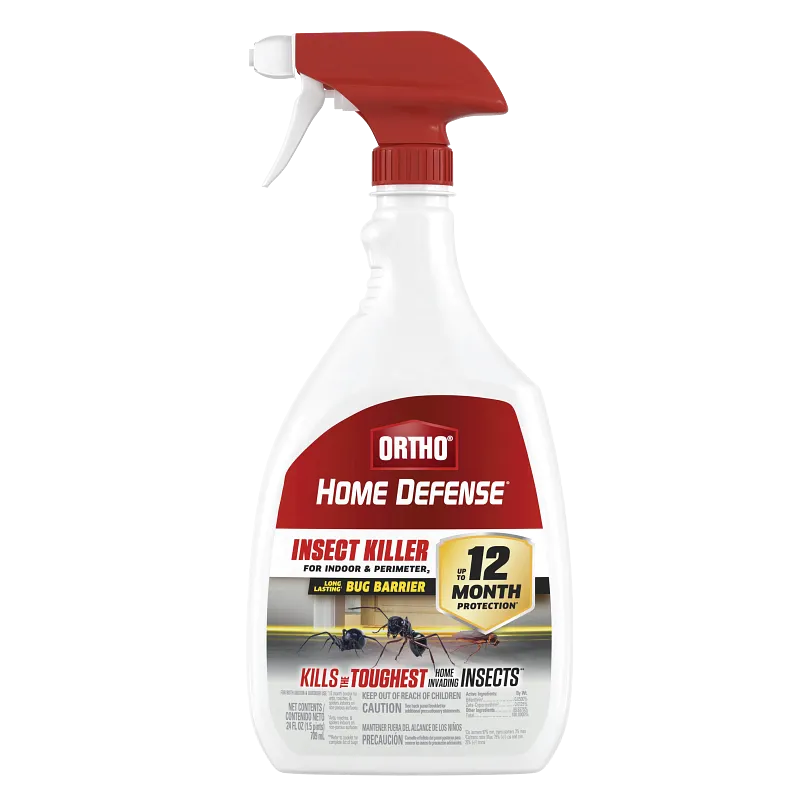
Ortho Home Defense Backyard Mosquito and Bug Killer Area Fogger helps control horse flies, deer flies, mosquitoes and other listed backyard pests. It provides up to 12-month protection indoors on non-porous surfaces and can be used to create a perimeter barrier outdoors. The ready-to-use trigger sprayer applies a clear, fast-drying, no-fumes formula for convenient spot or barrier treatment.
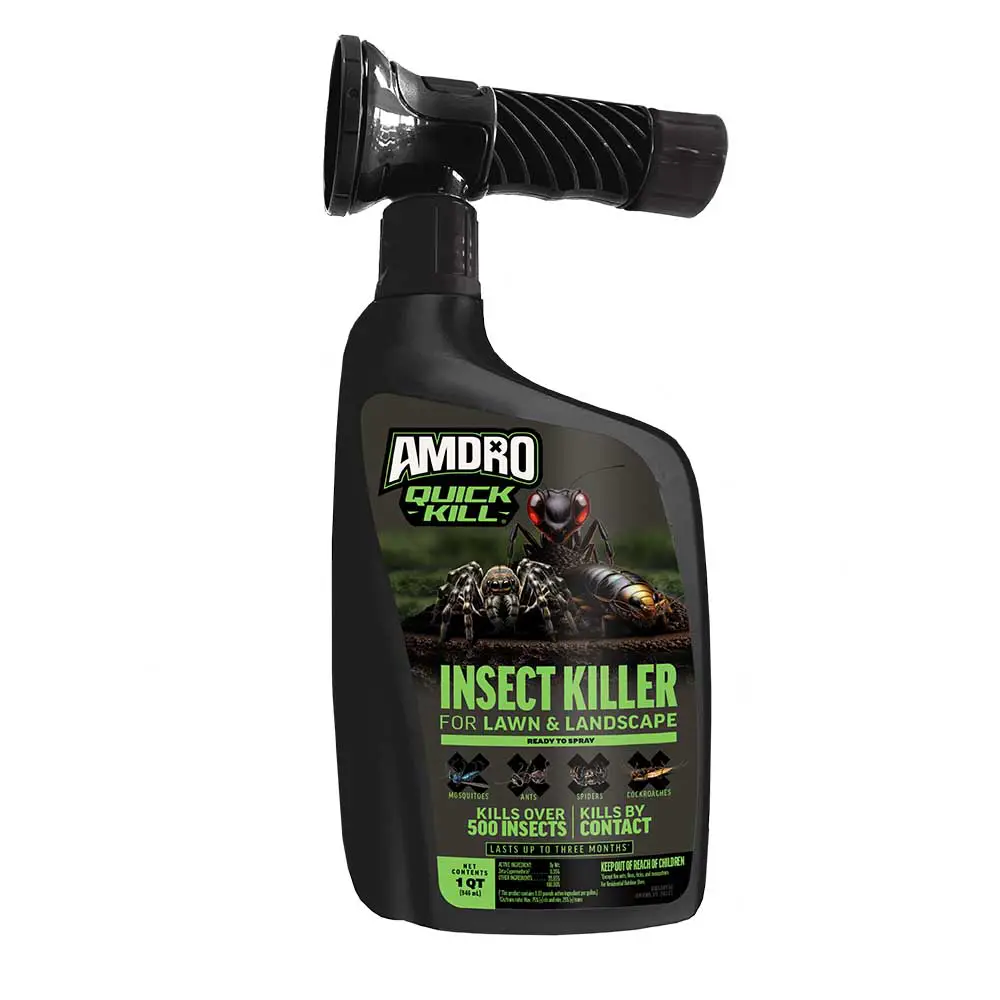
Amdro Quick Kill Insect Killer for Lawn & Landscape is a fast-acting ready-to-spray formula that starts working in minutes (except ticks) and kills over 500 insects. It kills by contact and is designed to be lawn-safe when used as directed, with control that keeps killing for up to 3 months (except fire ants, fleas, ticks and mosquitoes). Simply shake well, attach to the hose, and spray—no mixing or measuring required.
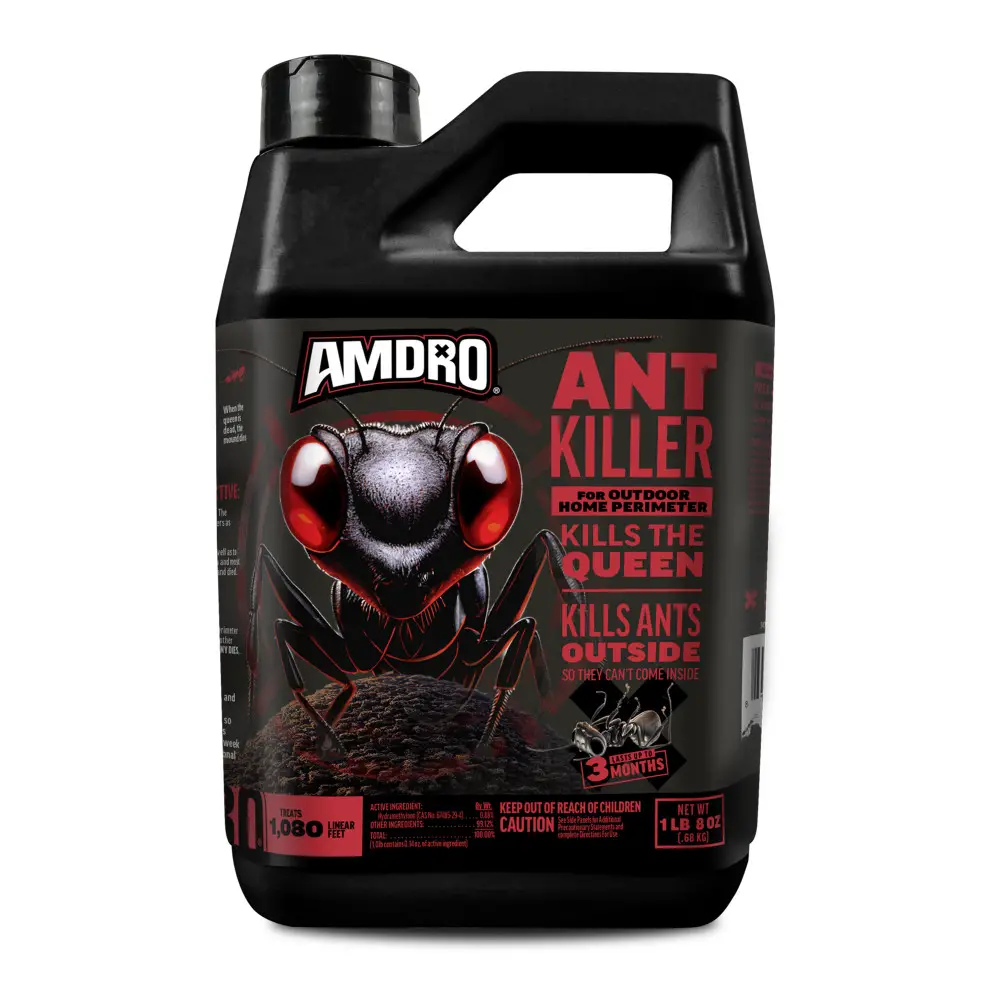
Amdro Ant Killer for Outdoor Home Perimeter creates a protective band that attracts and kills listed common ant species before they enter your home. Dual-action bait foraging workers carry it back to their colonies, helping reduce visible ants within about a week and stopping the colony, including the queen. For best results, apply when ants are active, and keep the treatment working up to three months for ongoing perimeter protection.
Exclusion: The Primary Control Strategy
Exclusion applied in late August and early September, before peak congregation and entry, is the most effective and lasting control approach. Box elder bugs enter through every type of small gap at the exterior: gaps around window and door frames, beneath siding, through soffit vents, around utility penetrations, beneath roof edges, and through any opening in the building envelope that leads to a wall void or attic space. Silicone caulk applied around window and door frames, foam weatherstripping on exterior doors, door sweeps, and screening of attic and soffit vents with hardware cloth reduce entry substantially.
Because box elder bugs are attracted to sun-warmed walls and use visual and pheromone aggregation cues, the population pressure on south and west-facing walls is consistently the highest. Prioritize exclusion work on those elevations.
Perimeter Insecticide Treatment
Residual pyrethroid insecticides applied to exterior wall surfaces, including around window and door frames, at the soffit line, and at the foundation, kill congregating bugs on contact and provide a protective barrier during the peak entry period. Bifenthrin, deltamethrin, and lambda-cyhalothrin products are effective against box elder bugs and are applied as a coarse low-pressure spray to the exterior surfaces where bugs congregate. Reapplication every two to three weeks through October maintains coverage as the active ingredient degrades with sun and rain exposure.
Treatment applied while bugs are actively congregating on the wall surface produces the highest immediate kill. Treating before congregation begins, in late August, reduces the number that arrive in the first place because it kills early arrivals before they emit aggregation pheromones that attract more individuals.
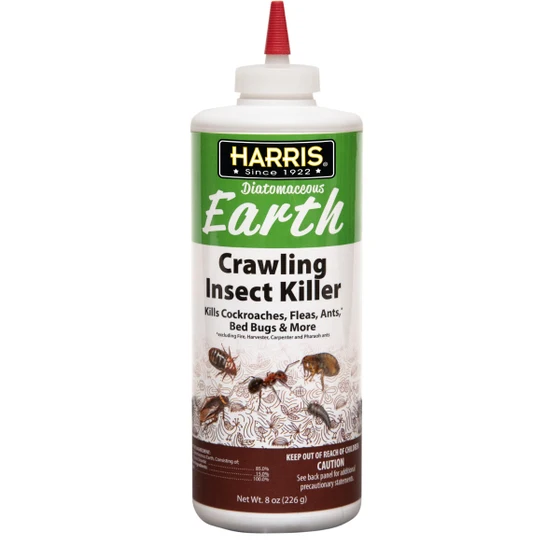
Harris Diatomaceous Earth Crawling Insect Killer is a ready-to-use 100% natural dust that targets crawling pests including ants, roaches, bed bugs, and fleas. Insects that contact or ingest the powder die within 48 hours when applied in cracks, crevices, and other hiding areas. Suitable for indoor and outdoor use with a powder duster included for easy application.
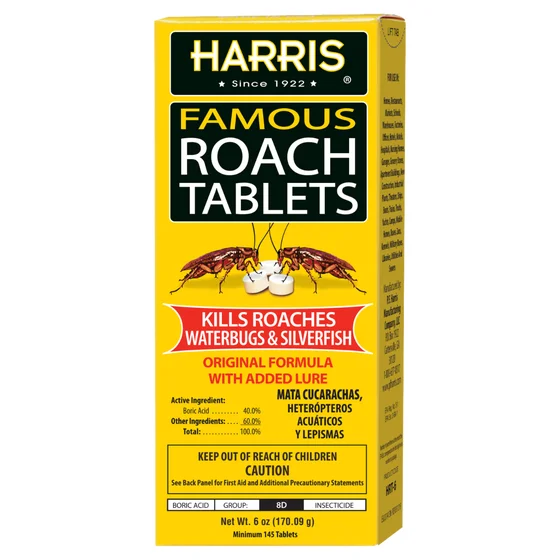
Harris Roach Tablets use boric acid with a formulated lure to attract roaches and help eliminate infestations at the source. The EPA-registered tablets are long lasting when kept dry and are designed to kill the entire colony by roaches carrying the bait back to their nests. Easy to conceal in hidden areas like under drawers, appliances, and cabinets, they offer an alternative to bait traps for treating multiple rooms.
Removing Bugs Already Inside
Box elder bugs that have entered wall voids and attic spaces remain largely dormant through the winter but emerge into living areas during warm spells or in late winter as temperatures rise. A vacuum with a hose attachment is the most effective removal tool for individual bugs appearing on walls and windows. Running the vacuum bag directly into a sealed plastic bag and disposing of it outside prevents bugs from crawling back out of the vacuum. Aerosol insecticide sprays kill individual bugs on contact but are not effective for those in wall voids, and applying insecticide inside wall voids risks creating an odor problem if large numbers die in an inaccessible space.
Reducing Host Tree Pressure
Properties with box elder trees, particularly female seed-bearing trees, within the yard or immediately adjacent to the home structure experience the highest annual bug pressure because the local population builds on the host trees through the summer before dispersing to structures in fall. Removing box elder trees from the immediate property is the most permanent population reduction strategy, though it is a significant commitment and does not prevent arrival from neighboring trees. Where tree removal is not practical, insecticide treatments to the host tree itself, using a systemic trunk-injection product, reduce the feeding population on the tree during the growing season. Consult a licensed arborist for tree injection applications.