
How to Get Rid of Chinch Bugs in Your Lawn
Chinch bugs (Blissus insularis in the South, Blissus leucopterus leucopterus in the North) are a turf pest that causes irregularly shaped brown patches in lawns that are frequently misdiagnosed as drought stress or fungal disease. The misdiagnosis is understandable because the brown patches appear during the hottest, driest periods of summer when drought stress is also at its peak, and the patches do not recover with irrigation because the damage mechanism is not lack of water. Chinch bugs feed by piercing grass stems and withdrawing phloem sap, and they inject a phytotoxic saliva that destroys plant tissue at a rate far exceeding the physical feeding damage alone. The affected grass is killed rather than stressed, and irrigation does not revive it.
Identifying Chinch Bug Damage
Chinch bug damage begins as small, irregular yellow-to-brown patches that expand outward from the center as the chinch bug population moves to healthy adjacent turf at the leading edge of the damaged area. The patches most commonly appear first in full-sun areas adjacent to sidewalks, driveways, and foundations where heat and drought stress are most concentrated and where chinch bugs prefer to feed. The damage progresses from yellow to straw-brown as the grass dies.
The key diagnostic distinction from drought stress is that drought-stressed turf, when the drought is relieved by irrigation or rain, shows visible recovery within a week or two. Chinch bug-killed turf in the same brown patch does not recover with irrigation. If your brown patch failed to green up after a significant rain or a week of consistent irrigation, chinch bugs or another pest problem are more likely than drought stress.
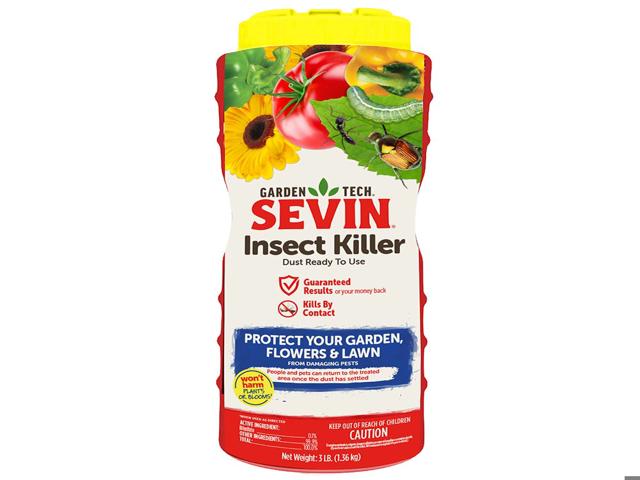
Sevin Insect Killer Dust helps protect flowers and lawn from listed damaging pests with a ready-to-use, shake-and-apply formula. It kills more than 150 insects by contact and creates a protective barrier when applied to leaves, stems, and flowers at the label rate. It won’t harm plants or blooms, and people and pets may return once the dust has settled.
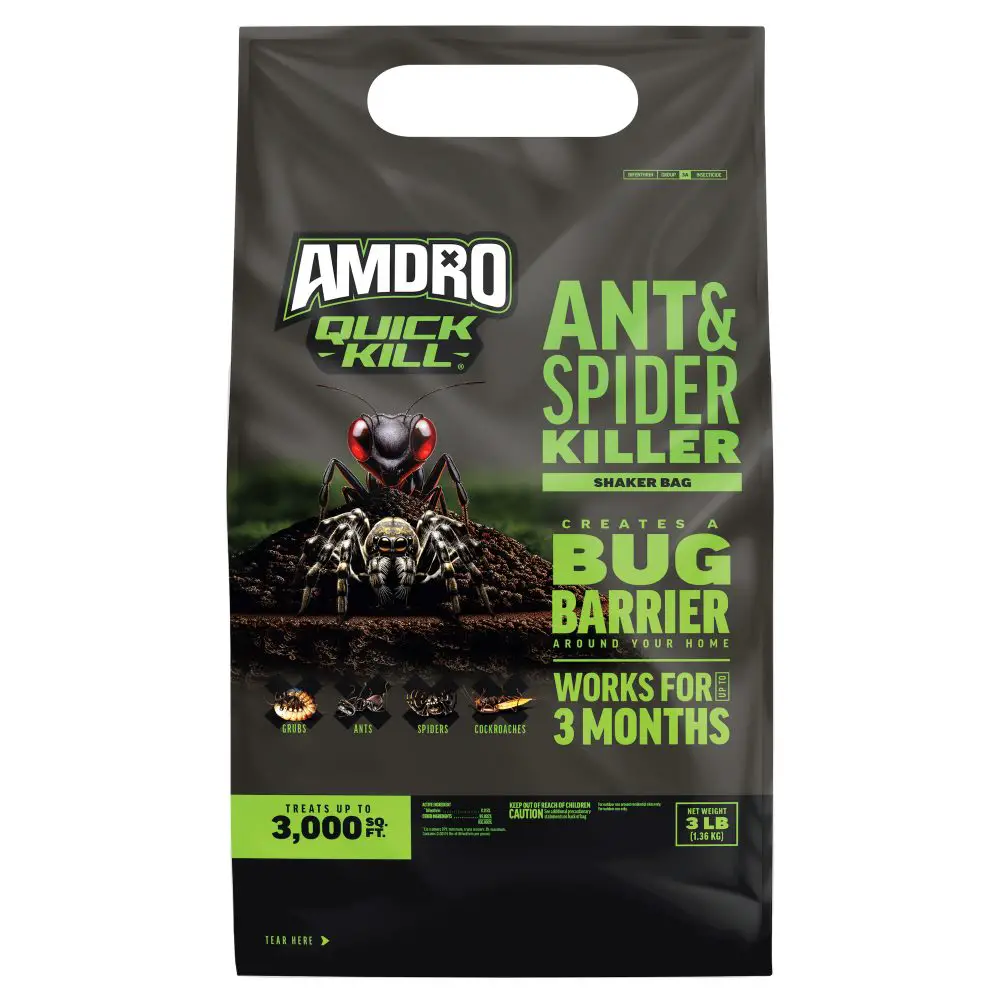
Amdro Quick Kill Ant & Spider Killer granules come ready to spread and help create a bug barrier around your home. The soil-penetrating formula kills listed insects by contact and works for up to 3 months, targeting lawn-damaging pests like grubs and mole crickets as well as surface pests such as ants and spiders. Simply apply evenly with the shaker bag, then lightly water the treated area to help control up to 100 listed insects and cover up to 3,000 square feet.
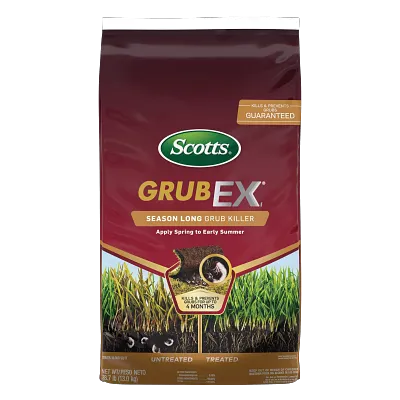
Scotts GrubEx1 is a season-long grub killer that keeps protecting your lawn from grubs and damage for up to 4 months with a single application. It helps stop grubs before they cause brown patches and harm grass roots, keeping your turf healthier. Apply in spring or early summer when grubs are developing for best results.
The Float Test for Confirming Chinch Bugs
The most reliable homeowner-level diagnostic test for chinch bugs is the float test. Remove both ends of a large metal can (a coffee can or vegetable can works well), push the rim two to three inches into the turf at the margin of a suspicious brown patch where healthy and damaged turf meet, and fill the can with water. Chinch bugs float and will appear on the water surface within about five minutes if they are present. Adult chinch bugs are small (about 4 to 5 mm), black with white wing patches, and unmistakable once identified. More than 20 per can indicates a treatment-level infestation.
Treatment: Insecticide Application Timing and Product Selection
Chinch bug populations are most active and most concentrated near the turf surface in June through August, when temperatures are highest and feeding pressure peaks. This is the correct treatment window for the current season’s population. Adult chinch bugs overwinter in the thatch layer and protected plant debris at the lawn margins; treatment in fall or early spring before active feeding resumes provides minimal benefit because the population is largely inactive and not concentrated at the turf surface.
Bifenthrin and lambda-cyhalothrin granular or liquid formulations applied to the turf surface and watered in lightly are the most effective synthetic insecticides for active chinch bug control. Apply to the damaged area and the immediately adjacent healthy turf where the active feeding population is concentrated. Water in after application to move the active ingredient into the thatch layer where chinch bugs feed, but use a light irrigation rather than a deep soak, which would move the insecticide below the zone where chinch bugs are active.
Pyrethrin provides fast knockdown of surface-active chinch bugs and degrades rapidly. It is appropriate as a supplemental contact treatment at the margin of the damaged area where the active population is feeding but is not a standalone residual treatment.
Beauveria bassiana is an organic insect-pathogenic fungus formulated as a spray that infects and kills chinch bugs through contact. It requires warm, humid conditions for effective activity and has a slower kill rate than synthetic insecticides, but it is appropriate for organic programs and for situations where the adjacent natural area or water body limits synthetic insecticide use.
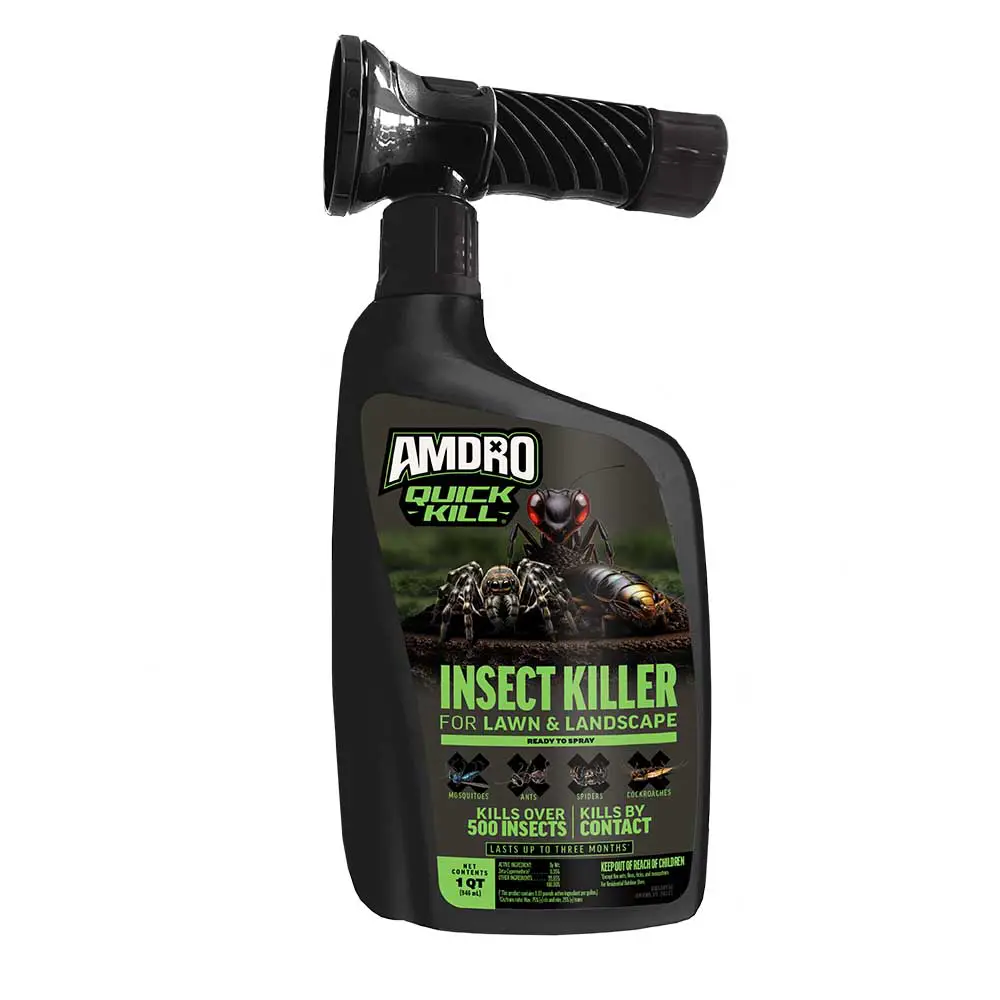
Amdro Quick Kill Insect Killer for Lawn & Landscape is a fast-acting ready-to-spray formula that starts working in minutes (except ticks) and kills over 500 insects. It kills...
Preventing Chinch Bug Reinfestation
Thick, healthy turf resists chinch bug establishment better than thin, stressed turf. Maintaining appropriate mowing height for the turf species (typically three to four inches for St. Augustinegrass, the most commonly affected species in the South), avoiding over-application of high-nitrogen fertilizer in summer that produces the dense, succulent growth chinch bugs prefer, and managing thatch depth through periodic dethatching or aeration all reduce the conditions that support high chinch bug populations.
Endophyte-enhanced turf grass varieties bred with naturally occurring fungal endophytes that are toxic to chinch bugs are available for some cool-season grass species and provide meaningful resistance to chinch bug damage over the long term. When overseeding or reestablishing a lawn in a chinch-bug-prone region, selecting an endophyte-enhanced variety where it is appropriate for the local climate is a practical long-term management tool.
Turf that has been severely damaged by chinch bugs requires sodding or overseeding to restore coverage after the pest population is controlled. Chinch-bug-killed turf does not regenerate from the crown the way drought-stressed turf does. Apply the overseeding or sodding after confirming that chinch bug activity has been reduced below the action threshold through treatment.