
How to Get Rid of Caterpillars and Cutworms in the Garden
Caterpillars and cutworms are both lepidopteran larvae, the juvenile stage of moths and butterflies, but their feeding habits are different enough that the practical control approach for each follows a different logic. Foliar caterpillars feed on leaves and new growth above the soil surface and are visible on plants during the day in most cases. Cutworms feed at or just below the soil surface at night, severing plant stems at ground level and retreating into the soil by morning, making them invisible to a daytime inspection while the evidence of their activity, a cleanly severed seedling or transplant stem, appears overnight. Treatment timing, product format, and application method differ between these two groups as a result.
Foliar Caterpillars: Identification and Treatment
The most common foliar caterpillar pests in home gardens are imported cabbageworm (Pieris rapae larvae) on brassica crops, tomato hornworm (Manduca quinquemaculata larvae) on tomatoes and peppers, corn earworm (Helicoverpa zea larvae) in corn and tomatoes, and the larvae of various armyworm and leafroller species across a range of hosts. Tent caterpillars and fall webworm create visible silk tents or webbing in trees and ornamental shrubs and are grouped here because the control approach is the same.
Bacillus thuringiensis var. kurstaki (Btk) is the primary organic treatment for foliar caterpillars and is the first-line recommendation for any caterpillar problem on food crops. Btk is a naturally occurring soil bacterium that produces crystalline protein toxins specific to lepidopteran larvae. When ingested by caterpillar larvae, the toxins bind to gut receptors, disrupting the gut lining, causing the larva to stop feeding and die within one to three days. Btk has essentially no activity against adult lepidoptera, beetles, bees, beneficial insects, birds, mammals, or other non-lepidopteran species.
Apply Btk as a foliar spray to all leaf surfaces where caterpillars are feeding, concentrating on the leaf undersides where younger caterpillars concentrate and where eggs are frequently laid. Apply in the late afternoon or evening, as Btk degrades quickly in UV sunlight and is most effective when ingested by caterpillars feeding on recently treated, moist foliage. Reapply every five to seven days during the active feeding period and after rain.
Btk works on young larvae (instars 1 through 3) far more effectively than on large, mature caterpillars in their final instars. Treat as early as possible after egg hatch is detected. Large, mature caterpillars may not be killed by Btk and are better controlled by hand-picking.
Spinosad is a second organic option derived from soil bacteria, effective against lepidopteran larvae with somewhat faster activity than Btk and with activity against slightly larger larvae. It is OMRI listed and appropriate for organic food crop use. Apply as a foliar spray at the label rate and rotate with Btk to avoid resistance development.
Carbaryl (Sevin) and pyrethroid insecticides provide rapid knockdown of caterpillars at any larval stage but are non-selective and will harm beneficial insects. Reserve these for severe infestations where organic options are not achieving adequate control, apply when pollinators are not active, and observe pre-harvest intervals on food crop labels.
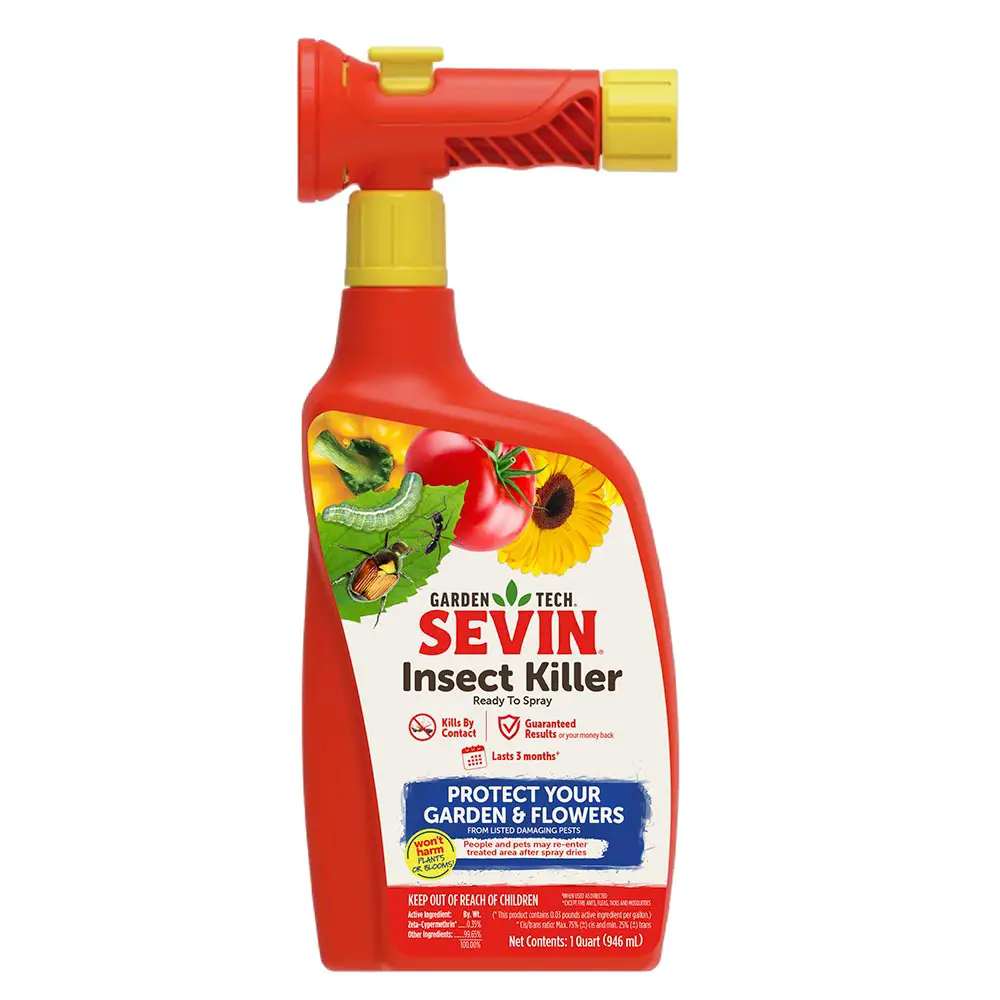
Sevin Insect Killer Ready to Spray helps protect flowers, vegetables, and ornamentals with a plant-safe formula that won’t harm blooms when used as directed. This hose-attachment spray targets a wide range of listed garden insects, including beetles, caterpillars, and aphids, for healthier plants. It provides up to 3 months of outdoor protection and lets people and pets return once the spray dries.
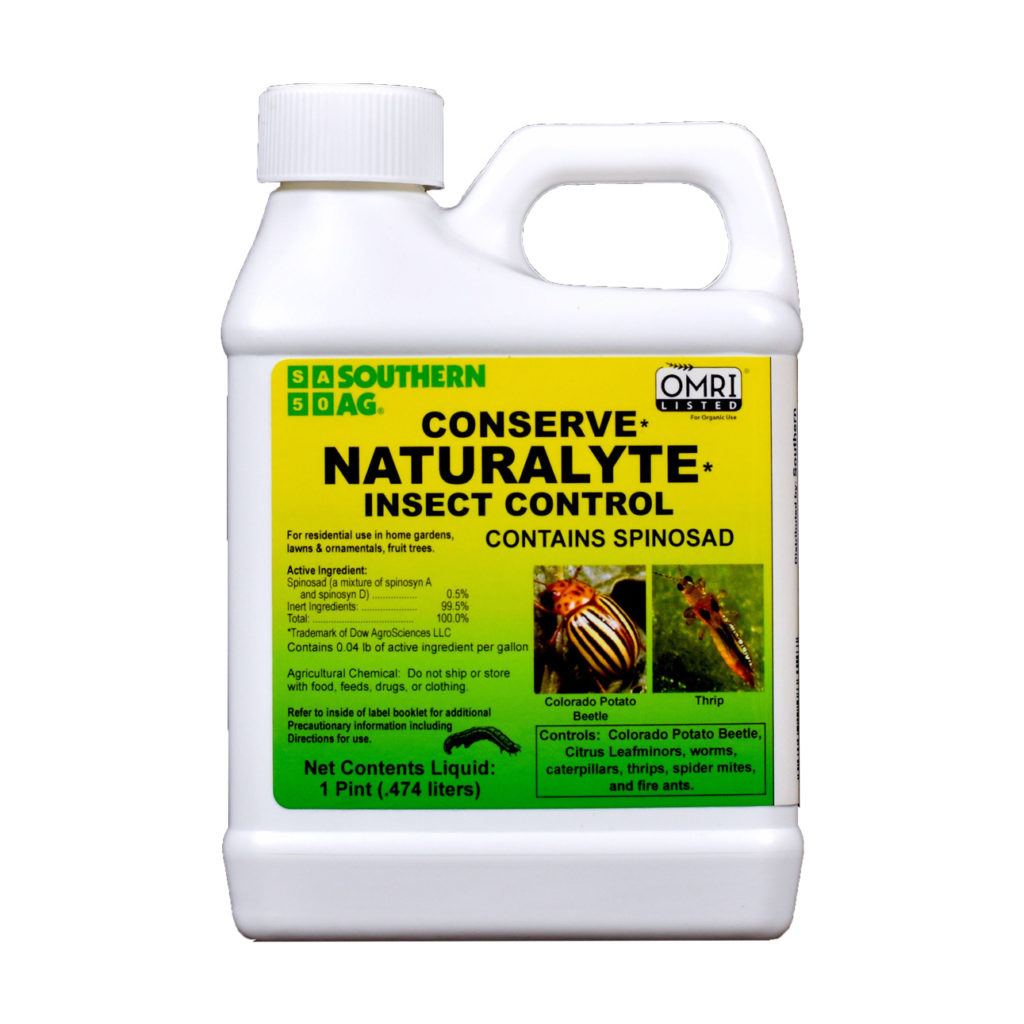
Conserve Naturalyte Insect Control is an OMRI-listed spinosad insect control for use on vegetables, ornamentals, and fruit trees. It helps control a wide range of pests including caterpillars, thrips, leaf miners, beetles, flies, fire ants, and fruit flies. Apply as a thorough cover spray and follow label directions for either spray or drench treatments.
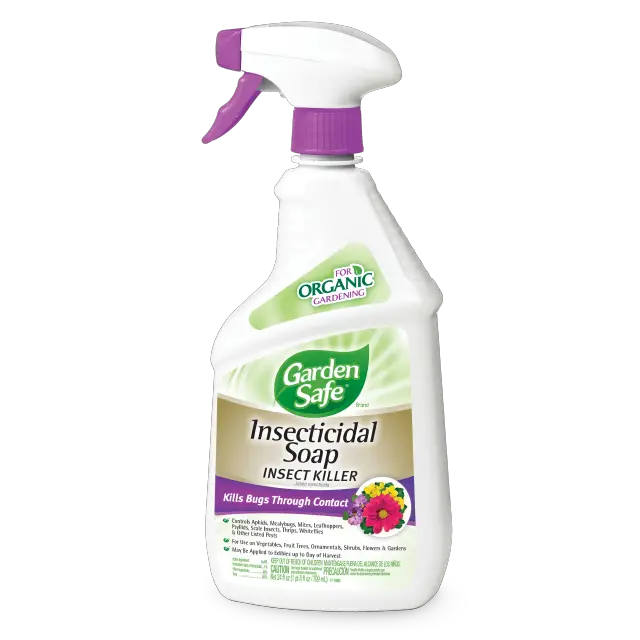
Garden Safe insecticidal soap is a ready-to-use contact spray that kills listed garden pests when sprayed directly on them. It’s formulated for organic gardening and can be used on vegetables, fruit trees, ornamentals, shrubs, flowers, and in indoor, outdoor, and greenhouse applications. For convenience, it may be applied to edibles up to and including the day of harvest.
Cutworms: A Different Pest Requiring a Different Approach
Cutworms are the larvae of several noctuid moth species, primarily Agrotis ipsilon (black cutworm) and related species. They overwinter as pupae or adults in the soil, emerge in spring, and the females lay eggs in the soil or on plant debris. Larvae are stout, smooth, gray to brown, and curl into a C-shape when disturbed. They feed from dusk to dawn, typically severing transplant and seedling stems at or just below the soil surface and pulling the severed plant material into the soil. A transplanted seedling severed at ground level overnight with no other plant damage nearby is the characteristic signature of cutworm activity.
Physical barriers are the most immediately effective cutworm protection for transplants. A collar made from a cut plastic cup, cardboard tube, or similar material, pushed two to three inches into the soil and extending two to three inches above it around each transplant stem, prevents cutworms from reaching the stem. Apply collars at transplanting time, before cutworm damage begins.
Soil bait formulations of carbaryl or metaldehyde are appropriate for established cutworm pressure where collars are impractical across large plantings. Scatter granular bait on the soil surface in the late afternoon, watering it in lightly if dry. Cutworms feed on the bait during their nocturnal surface activity.
Beneficial nematodes (Steinernema carpocapsae) applied to the soil surface as a drench target cutworm larvae in the upper soil profile. Apply when soil temperature is between 60 and 85 degrees Fahrenheit, keep the soil moist for two weeks after application, and avoid applying in direct sun.
Btk is not effective against cutworms because the damage occurs before young larvae are above the soil surface and exposed to treated foliage. Spinosad mixed into bait applied to the soil surface has shown some activity against cutworms and is the organic alternative to carbaryl bait in situations where synthetic chemistry is not acceptable.