
How to Lay Patio Pavers on Sand
Sand-set paver installation is the standard method for residential patio work and the technique most relevant to DIY homeowners. The bedding sand layer is both the leveling medium that allows each paver to be set at precisely the correct height and the flexible structural interface that allows the surface to accommodate minor seasonal ground movement without cracking.
Getting the sand bed right is the skill at the heart of paver installation. This guide focuses specifically on the sand selection, screeding setup, placement sequence, and compaction technique that produce a flat, stable, and long-lasting paved surface.
This guide assumes that excavation, sub-base compaction, and edge restraint installation are complete. For the full installation sequence from the beginning, see the how to install a paver patio guide.
Choosing the Right Bedding Sand
The sand specification is more important than most homeowners realize. Using the wrong sand type is a common cause of paver patio settlement and surface rocking in the years after installation.
Use coarse, angular concrete sand. Also sold as sharp sand, manufactured sand, or concrete bedding sand, this product has angular, irregular particle shapes that interlock under compaction to create a stable, load-bearing bed. It is the correct material for paver bedding in residential patio applications.
Do not use fine masonry sand, play sand, or beach sand. These fine, rounded particle sands do not interlock under load. They compress under paver weight and foot traffic, allowing pavers to sink and rock. Fine sand also migrates laterally under the surface more readily than coarse sand, contributing to uneven settlement over time.
Do not use stone dust or decomposed granite as a bedding medium. These materials compact too firmly and do not provide the slight flexibility that allows the sand bed to accommodate minor sub-base movement. They also cause problems when the surface needs to be lifted and reset, as the compacted material does not release cleanly.
A standard 50 lb bag of coarse concrete sand covers approximately 0.5 square feet at a 1-inch depth, a very small area. For any patio larger than 50 square feet, ordering sand in bulk by the ton or cubic yard is significantly more practical and economical.
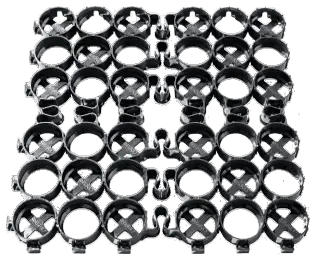
TRUEGRID PRO LITE permeable pavers are lightweight, DIY-friendly driveway and outdoor base pavers that install easily for a variety of projects. Made in the USA from 100%...
Setting Up Screed Rails
Screed rails are temporary guides that control the depth and flatness of the screeded sand layer. They are the most important setup step in the sand-bedding process.
The standard approach uses lengths of 1-inch diameter steel conduit as screed rails. The 1-inch diameter sets the bedding sand depth automatically when the screed board rides across the top of both rails, any sand above the rail height is removed, leaving a perfectly consistent 1-inch bed.
Setting rail height: The top of the screed rail must sit at a height equal to the finished patio surface level minus the paver thickness. For a standard 2.375-inch concrete paver on a 1-inch sand bed, the rail top should sit at finished surface level minus 2.375 inches, which means the sub-base surface at the rail location sits at finished surface level minus 3.375 inches (sand + paver thickness). Set the rail height carefully at both ends using a string line representing the finished surface.
Rail spacing: Place rails parallel to each other and approximately 6 to 8 feet apart, close enough that a straight 2×4 or aluminum screed board spans both rails firmly without sagging. Wider spacing produces a less accurate result because the screed board will sag between rails under its own weight.
Rail slope: The rails must be set at the same drainage slope as the intended finished surface, a minimum of 1/8 inch per foot away from the house. Check the slope along the length of each rail using a spirit level and a known spacer under the level’s low end, or use a slope level set to the target gradient.
Screeding the Sand
With rails in place, dump coarse concrete sand between them and spread it roughly to slightly above rail height. Then draw the screed board across the top of both rails in a smooth, even motion, a gentle sawing back-and-forth as you pull toward you produces a cleaner result than a single straight drag. Fill any low spots that appear behind the screed board and pass the screed over them again.
The finished screeded surface should be smooth, flat between the rails, and free of footprints or disturbance. Remove the screed rails from the screeded sand carefully, pull them out along their length rather than lifting them straight up, which disturbs less sand. Fill the two channels left by the rails with additional sand and pat them level by hand, or use a short piece of conduit to smooth the channels before laying pavers across them.
Do not walk on the screeded sand. Every step creates a depression that must be re-screeded before laying can resume at that point. Work from the edge of the patio, from a paving board (a plank of timber laid across two or more already-set pavers to distribute your weight), or advance the screed section by section so you are always laying from a position that does not require stepping onto unscreeded sand.
Work in manageable sections. Screed 6 to 8 feet at a time, lay the pavers in that section, then remove and reset the rails to screed the next section. Do not screed the entire patio at once, exposed screeded sand is vulnerable to disturbance from foot traffic, tool handles, and rainfall before the pavers are laid.
Laying Pavers on the Sand Bed
Begin laying from the most prominent straight edge of the patio, typically the house wall or the long outer edge. Set the first paver against the edge restraint and work outward row by row.
Place, do not slide. Hold each paver level in both hands, position it over the intended location, and lower it straight down onto the sand. Sliding a paver into position drags the surface sand and creates a ridge that forces the paver to sit high. Placing it vertically does not disturb the sand bed and produces a consistent seating depth.
Tap firmly into position. Once placed, strike each paver two to three times with a rubber mallet, not a steel hammer, which will chip the paver surface, to bed it into the sand. The paver should not rock or move under hand pressure after this step.
Maintain consistent joint width. Most concrete pavers have integral spacer lugs cast into their sides that automatically maintain the correct joint width when pavers are butted against each other. For pavers without spacer lugs, use plastic tile spacers of the appropriate joint width. Consistent joint width affects both the appearance of the finished surface and the performance of the joint sand.
Check level frequently. Use a 4-foot spirit level across three to four pavers in both directions every four to five rows. The surface should be consistently flat across adjacent pavers with no lips or rocking. A paver that sits high: tap it down with the rubber mallet. A paver that sits low: lift it, add a small pinch of sand underneath, and re-set.
Cutting Border Pavers
Gaps at the patio edges almost always require cut pavers. Measure each gap individually rather than assuming cuts will repeat, slight irregularities in the sub-base and edge restraint mean dimensions vary along the border.
For concrete pavers with straight cuts, a manual or hydraulic paver splitter produces clean, fast results and is available to rent from most tool hire centers. Score the cut line on the paver face with a pencil or chalk, position the cutting blade, and apply pressure.
For curves, angles, or natural stone pavers, use an angle grinder fitted with a segmented diamond blade. Score the cut line first at low depth, then deepen in two or three progressive passes. Always wear eye protection, hearing protection, and a dust mask when cutting pavers.
Final Compaction
Once all pavers are laid and cut border units are in place, compact the entire surface with a plate compactor fitted with a rubber or neoprene foot pad. The pad is essential, a bare compactor plate will scratch and pit the paver surface. Make two passes in perpendicular directions across the full area.
Compaction drives the pavers into the bedding sand and activates the interlock between adjacent units. A surface that has not been compacted will feel slightly springy underfoot and will settle unevenly during first-season use.
After the first compaction pass, walk the entire surface checking for high or rocking units. Tap down any high pavers with a rubber mallet. For a paver that still rocks after compaction, lift it, add a small amount of sand to the low side of the bed beneath it, and re-set before compacting again.
Jointing After Compaction
Once the surface is compacted and level, fill the joints with polymeric jointing sand. Sweep it into all joints with a push broom, compact the surface once more to settle the sand further into the joints, top up with additional sand, sweep the surface completely clean, then activate the polymeric binder with a fine water mist per the product instructions.
For full jointing technique including polymeric sand activation and the first-season top-up schedule, the how to install a paver patio guide covers the jointing step in detail within the full installation context.
Common Sand-Bedding Mistakes and How to Avoid Them
Using the wrong sand: The most common error. Coarse angular concrete sand is the only appropriate bedding material. Fine, rounded sand products produce an unstable bed that settles unevenly.
Screeding too large a section at once: Screeded sand exposed to foot traffic, tool handles, and rain before being covered by pavers will be disturbed and require re-screeding. Screed in sections proportional to how quickly you can lay.
Walking on the screeded sand: Even a single footprint creates a depression. Use a paving board laid across already-set pavers to work from, or advance in sections that keep you off the prepared bed.
Not checking level frequently enough: A level error that goes uncorrected for several rows becomes increasingly difficult to address without lifting a large section. Check every four to five rows.
Skipping the final compaction step: Pavers that are hand-set but not machine-compacted will bed in unevenly during first-season use, creating a surface that develops lips and rocking units within months.