
Daisy Fleabane: Identification and Control
Daisy fleabane (Erigeron annuus) is an annual or biennial broadleaf plant in the daisy family (Asteraceae) that is native to North America but behaves as a weedy opportunist in disturbed soils, thin lawns, roadsides, and field edges. It produces prolific small white daisy-like flowers that mature into wind-borne seeds, allowing it to spread rapidly into open ground. It is not as commonly discussed as dandelion or crabgrass, but it is a persistent presence in thin lawns and garden edges across much of the eastern US.
Identification
Leaves: Basal leaves are large (up to 4 inches long), oval to spoon-shaped with coarse teeth. Stem leaves are smaller, lance-shaped, and alternate along the stem. All leaves are hairy.
Stem: Upright, branching near the top, covered in spreading hairs. Can reach 18 to 48 inches tall when not mowed.
Flowers: Small (less than 1 inch across), with numerous narrow white to pale purple ray petals surrounding a yellow center disk. Flowers appear in spring through early summer on annual forms. Multiple flower heads per plant.
Seeds: Achenes with a papery ring (pappus) that catches wind, similar to dandelion seed mechanism. A single plant can produce 10,000 or more seeds.
Annual vs biennial: Erigeron annuus is primarily an annual but some plants overwinter as rosettes and flower the following spring as biennials. Erigeron strigosus (rough fleabane) is a similar species found in drier conditions.
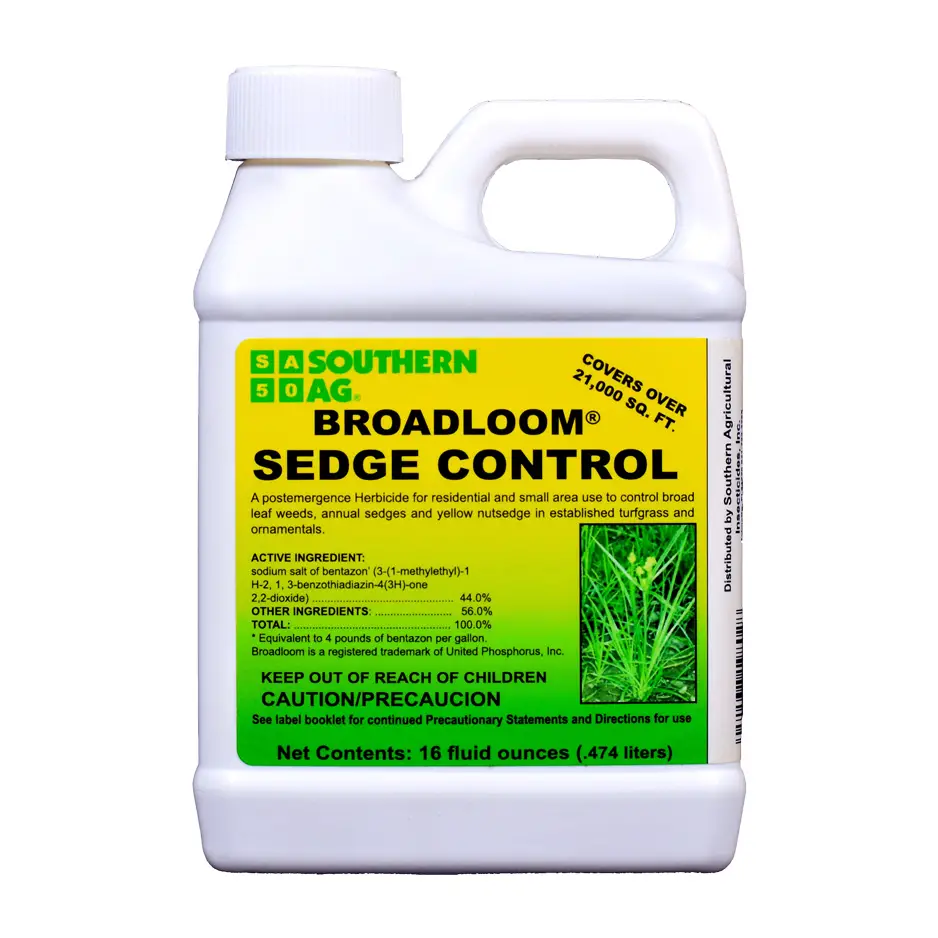
Southern Ag Broadloom Sedge Control helps control nutsedge (nutgrass) and certain broadleaf weeds in established turfgrass. It can be applied over the top on certain ornamentals and may require repeat applications for hard-to-control weeds like sedge. Use a low rate of 0.75 oz per 1,000 sq. ft., and it can be mixed with other weed killers for flexible weed management.
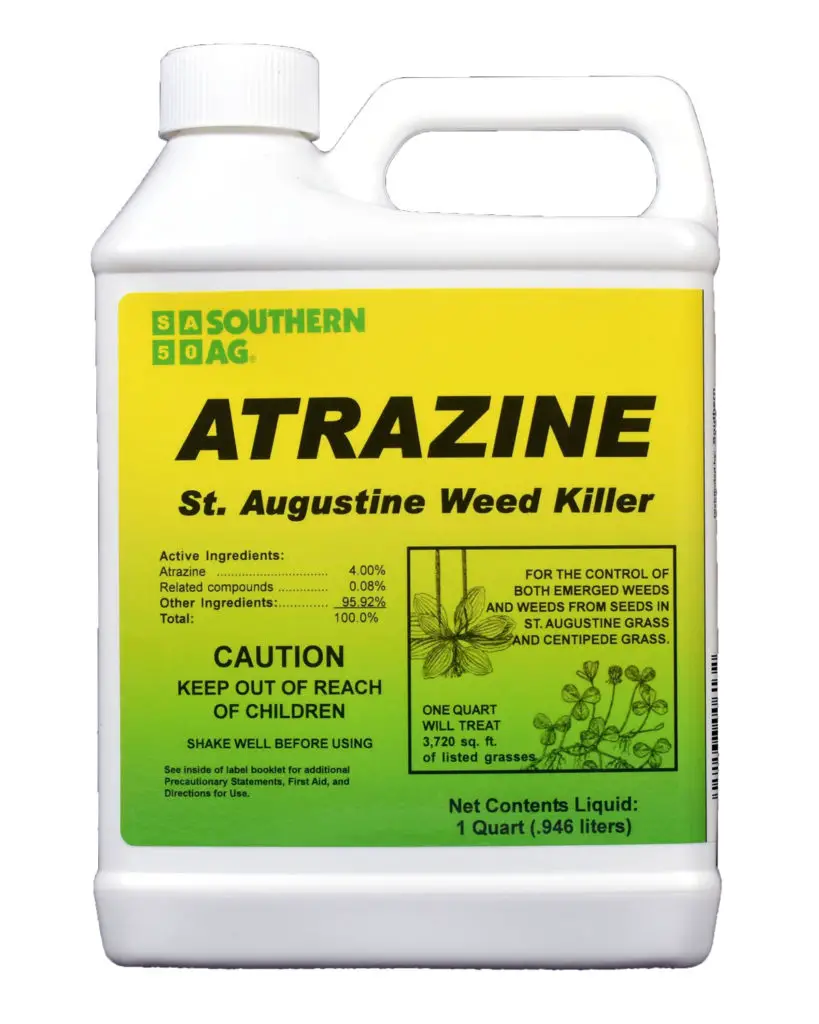
Southern Ag Atrazine St. Augustine Weed Killer helps control many common grassy and broadleaf weeds, including weeds from seed and emerged growth. It is labeled for use on St. Augustine and centipede lawn grasses, and also provides suppression of crabgrass. Best results are obtained with early spring application and thorough, accurate spray coverage without overlap.
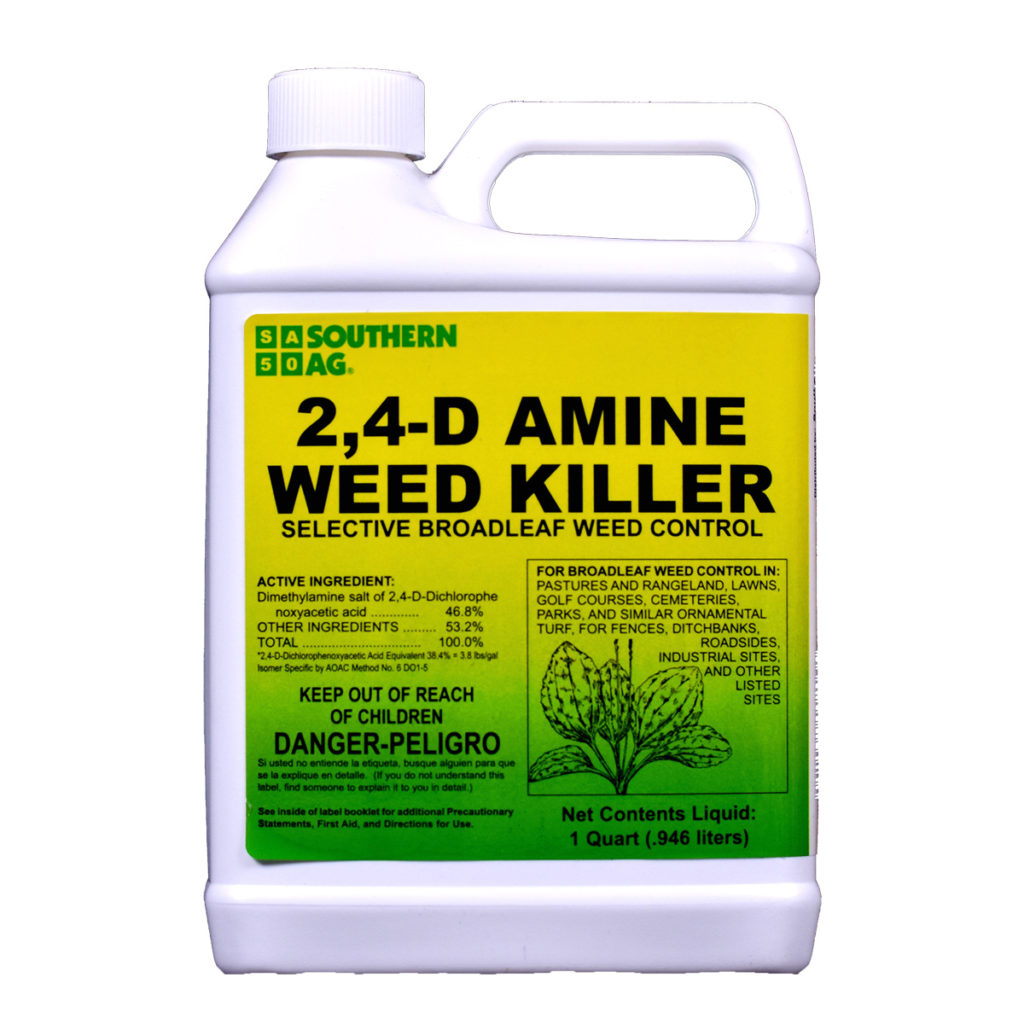
Southern Ag Amine 2,4-D Weed Killer controls many broadleaf weeds & woody plants with a low, economical use rate. It’s suitable for turf, lawns, parks, golf courses, pastures, rangeland, ditch banks, fence lines, and non-crop sites. Apply as a coarse low pressure spray and follow label coverage guidance to minimize drift to susceptible plants.
Why Daisy Fleabane Appears in Lawns
Daisy fleabane is an opportunistic colonizer of disturbed or thin ground. In a dense, healthy lawn it has difficulty establishing because germinating seeds need light and open soil. It appears most commonly in:
- Thin or worn lawn areas with gaps in turf coverage
- Lawn edges adjacent to roadsides or unmowed areas where seed pressure is high
- Recently disturbed soil (around bed edges, construction areas, bare patches)
- Lawns with low pH or poor fertility where turf density is reduced
A recurring daisy fleabane problem is often a symptom of thin turf rather than simply a seed pressure issue. Building turf density through overseeding and correct fertilization is the most sustainable long-term prevention.
Herbicide Control
Daisy fleabane is a broadleaf weed and is controlled by broadleaf selective herbicides. It is generally responsive to standard three-way broadleaf products.

Preen Garden Weed Preventer Plus Plant Food helps prevent weeds while feeding your plants in one simple application. Safe for use in established flower and vegetable garden beds around trees, shrubs, and ground covers, it supports strong root development and abundant blooms. Use during spring, summer, or fall for best results and water it into the soil after sprinkling.
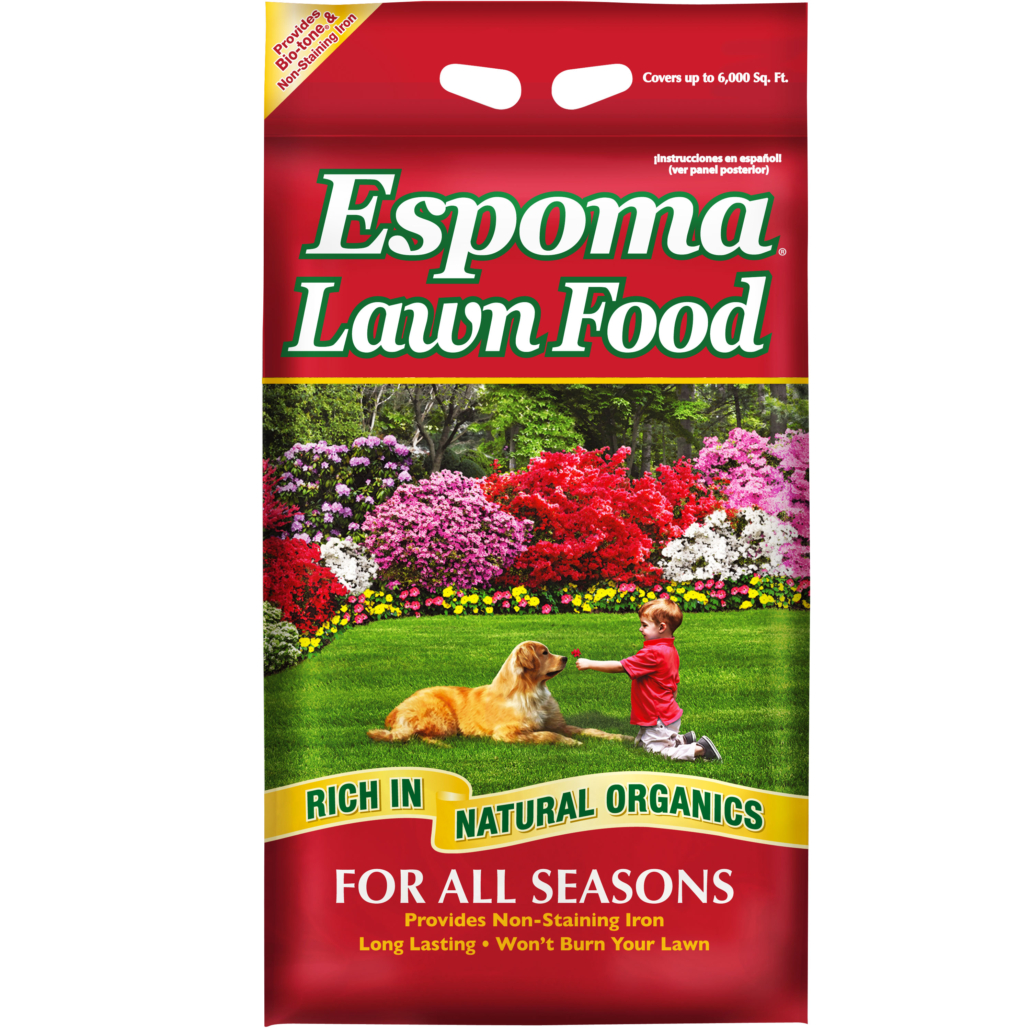
Espoma Lawn Food for All Seasons 15-0-5 provides slow-release, long-lasting nitrogen to help support a greener lawn year-round. Enhanced with iron for deep green color, it helps turn yellow lawns back to green and won’t stain concrete, sidewalks, or driveways. Safe for cool and warm season grasses, it applies in spring, summer, and fall with a drop or broadcast spreader.
Post-Emergent Herbicide (Most Common Approach)
Apply a selective broadleaf herbicide containing 2,4-D, dicamba, and MCPP when daisy fleabane plants are actively growing and before they reach the flowering stage. Young plants are more susceptible than mature, well-branched plants approaching flower.
Products that provide good control: Spectracide Weed Stop for Lawns, Ortho Weed B Gon Max, Bayer Advanced All-in-One Lawn Weed Killer. All use the three-way 2,4-D, dicamba, MCPP combination that controls most common broadleaf lawn weeds including Erigeron species.
Timing: Spring application on young plants, before the plant branches extensively or begins to flower. Annual forms can also be treated in fall as rosettes if the biennial cohort is present.
Pre-Emergent Control
Daisy fleabane germinates from a persistent soil seed bank, and the same pre-emergent herbicides used for annual broadleaf weed prevention (isoxaben, pendimethalin) provide some reduction in daisy fleabane germination. However, because it also establishes as a biennial and produces wind-blown seed that can arrive from outside the treated area, pre-emergent alone is not fully reliable for daisy fleabane management. Post-emergent treatment of young plants is the primary tool.
Manual Removal
Daisy fleabane is relatively easy to hand-pull when the soil is moist, as the root system is not as deep or extensive as perennial weeds like dandelion or plantain. Pull before flowering to prevent seed production. In thin lawn areas, remove plants early in the season before they branch and expand.
Mowing before seed heads mature prevents the wind-dispersed seed from spreading to adjacent areas. A lawn mower with a bag attachment during the mowing cycle near fleabane seed heads reduces seed spread.
Long-Term Prevention
The most durable prevention strategy is a dense, well-fertilized lawn that closes off the bare-soil germination opportunities that daisy fleabane exploits. Overseeding thin or worn areas in fall, maintaining correct mowing height to prevent scalping that exposes bare soil, and following a consistent fertilization schedule builds the turf density that prevents establishment.
For lawns adjacent to unmowed roadsides or fields where seed pressure from daisy fleabane is continuous, an annual spring treatment with a broadleaf post-emergent herbicide targeting young plants is the most practical management approach.