
Best Fertilizer for Bermuda Grass
Bermuda grass is one of the most nitrogen-demanding home lawn grasses, requiring 3 to 6 pounds of actual nitrogen per 1,000 square feet per year to maintain the dense, dark green turf it is capable of producing. Choosing the right fertilizer for Bermuda means selecting the correct NPK ratio for the season, matching the nitrogen release rate to the application frequency you can manage, and avoiding the mistake of applying fertilizer outside the warm-season growing window.
What Bermuda Grass Needs From Fertilizer
Bermuda grass in active summer growth has a high nitrogen demand, a moderate potassium demand for stress tolerance and cell wall strength, and minimal phosphorus requirements in established lawns on soils that already contain adequate phosphorus.
A fertilizer NPK ratio of 24-0-12 or 28-0-10 suits most established Bermuda lawns well: high nitrogen to drive the dense growth and dark color that Bermuda is capable of, no phosphorus (appropriate for established turf in most states), and meaningful potassium to support stress tolerance through the summer heat and intermittent drought stress of its native growing conditions.
For a foundational explanation of what NPK means and how to calculate nitrogen rates per 1,000 square feet, see lawn fertilizer basics: NPK, types, and how it works.
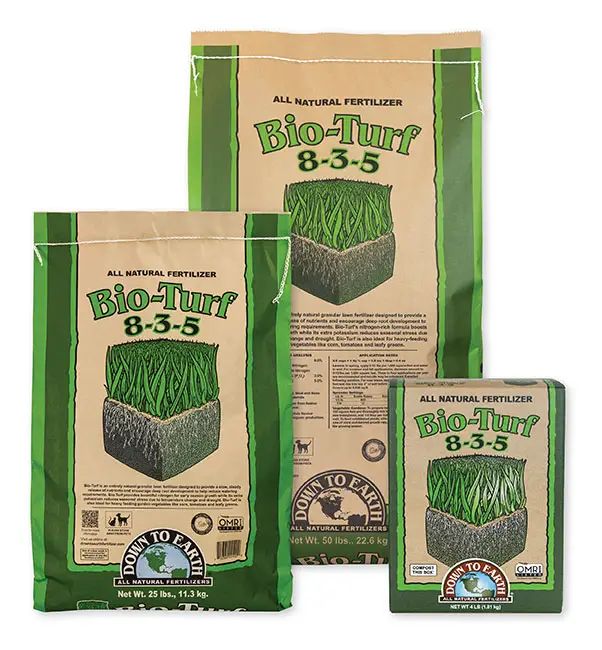
Down to Earth Bio-Turf is an all-natural 8-3-5 organic fertilizer, OMRI listed for use in organic production. It helps encourage deep root development to support greener, stronger growth while reducing watering needs and stress from heat or drought. Ideal for lawns, landscape ornamentals, and heavy-feeding garden vegetables and flowerbeds.
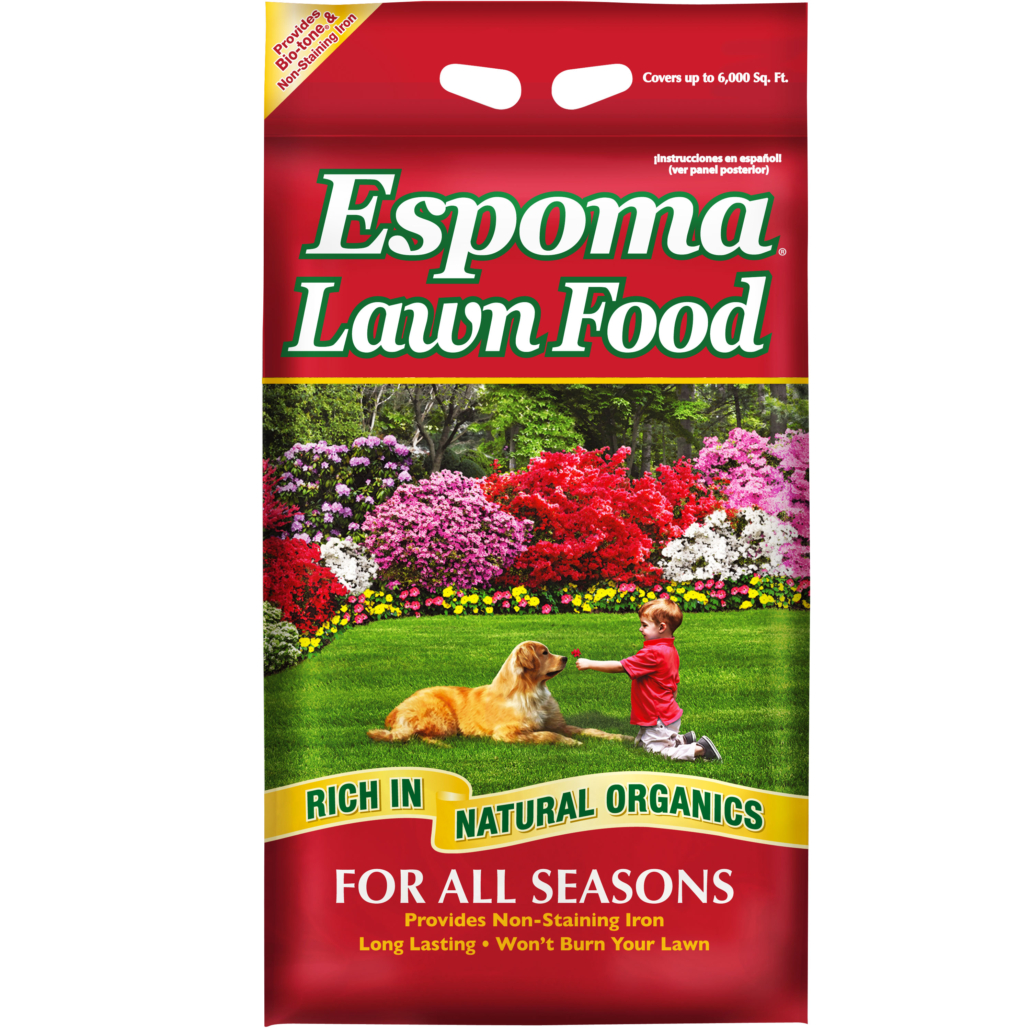
Espoma Lawn Food for All Seasons 15-0-5 provides slow-release, long-lasting nitrogen to help support a greener lawn year-round. Enhanced with iron for deep green color, it helps turn yellow lawns back to green and won’t stain concrete, sidewalks, or driveways. Safe for cool and warm season grasses, it applies in spring, summer, and fall with a drop or broadcast spreader.

Espoma Organic Lawn Food Summer Revitalizer 8-0-0 delivers long-lasting organic nitrogen to help invigorate lawns during hot weather while adding iron for deep, greener color. Designed for all lawn types and cool- or warm-season grasses, it helps turn yellow lawns back to green without burning or leaching out of soil. Environmentally safe with no sludges or toxic ingredients, it won’t stain concrete, sidewalks, or driveways and is approved as a registered organic input material.
Best Fertilizers for Bermuda Grass
Scotts Turf Builder Southern Lawn Food (32-0-10)
Format: Granular NPK: 32-0-10 Nitrogen type: Slow-release polymer-coated urea
Scotts Southern Lawn Food is formulated and labeled specifically for warm-season southern grasses including Bermuda. The 32-0-10 ratio delivers a strong nitrogen hit alongside meaningful potassium, and the slow-release nitrogen source reduces the burn risk that high-nitrogen applications carry in summer heat. It is the most widely available consumer fertilizer specifically designed for Bermuda’s needs.
Application rate: Follow label, typically 3.2 pounds per 1,000 square feet delivering approximately 1 pound of actual nitrogen.
Lesco Professional Turf Fertilizer (24-0-11)
Format: Granular NPK: 24-0-11 Nitrogen type: Slow-release polymer-coated
Lesco’s professional-grade formulation is available through some independent garden retailers and online. The 24-0-11 ratio provides a slightly more conservative nitrogen rate alongside very high potassium, making it particularly appropriate for mature Bermuda lawns that are already dense and do not need aggressive nitrogen stimulation. The high potassium level supports the heat and drought stress tolerance that Bermuda lawns in the South and Southwest face through the summer.
Milorganite (6-4-0) for Summer Applications
Format: Granular (organic) NPK: 6-4-0 Nitrogen type: Slow-release organic (biosolids)
Milorganite is not a high-nitrogen product for Bermuda, but it has a specific role in a Bermuda fertilizer program: safe summer supplementation when temperatures are extreme and synthetic nitrogen burn risk is elevated. During heat events above 95 degrees Fahrenheit, applying Milorganite at reduced rate (16 pounds per 5,000 square feet) provides maintenance nitrogen with essentially no burn risk. It also contains iron, which supports chlorophyll and deep color in Bermuda during summer when iron chlorosis can develop on alkaline soils.
Andersons Innova Organic Fertilizer (8-1-5)
Format: Granular (organic) NPK: 8-1-5
For homeowners who prefer an organic nitrogen source, Andersons Innova provides a balanced organic nitrogen option at a higher rate than Milorganite while maintaining low burn risk. It is appropriate for the transition periods of spring and fall when temperatures make synthetic nitrogen applications riskier.
Bermuda Grass Fertilizer Schedule
Bermuda grass fertilizer timing is tied to soil temperature and active growth. Do not fertilize before full dormancy break or after the lawn begins approaching fall dormancy.
Late spring (dormancy break plus 2 weeks, soil temperature consistently above 65°F): Apply 0.75 to 1 pound of actual nitrogen per 1,000 square feet with a slow-release granular product. This first application drives the spring green-up and supports early stolon and rhizome growth.
Early summer (6 to 8 weeks after spring application): Apply 0.75 to 1 pound of actual nitrogen per 1,000 square feet. Use a slow-release product to reduce burn risk in warming conditions.
Mid-summer (optional, high-demand situations only): A light application of 0.5 pounds of actual nitrogen per 1,000 square feet using Milorganite or a low-rate slow-release synthetic is appropriate for lawns showing nitrogen deficiency or for high-traffic lawns that need additional support during peak use.
Late summer (stop by mid-August in transition zone, September 1 in deeper South): Final application before pre-dormancy. Apply 0.5 to 0.75 pounds of actual nitrogen per 1,000 square feet. Do not apply nitrogen after this point; late-season nitrogen delays dormancy entry and increases vulnerability to fall disease and frost damage.
Fall and winter: No nitrogen applications while Bermuda is dormant.
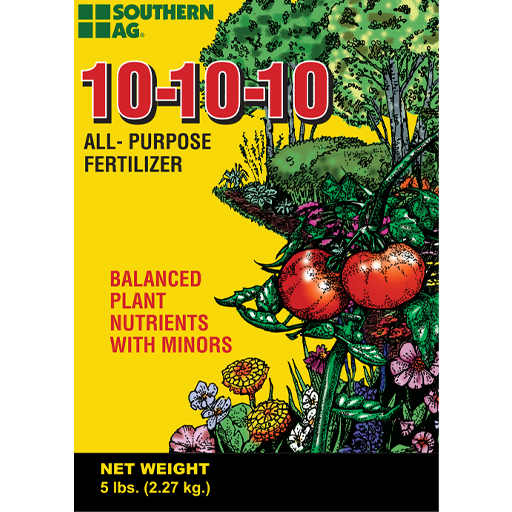
Southern Ag All Purpose Granular Fertilizer 10-10-10 helps nourish lawns, flower beds, vegetables, and trees with a balanced blend of essential nutrients. The granular formula is designed for easy application and supports healthy growth across a wide range of plants and seasons. Follow label directions to sweep off any granules from hard surfaces and water plants well after applying.
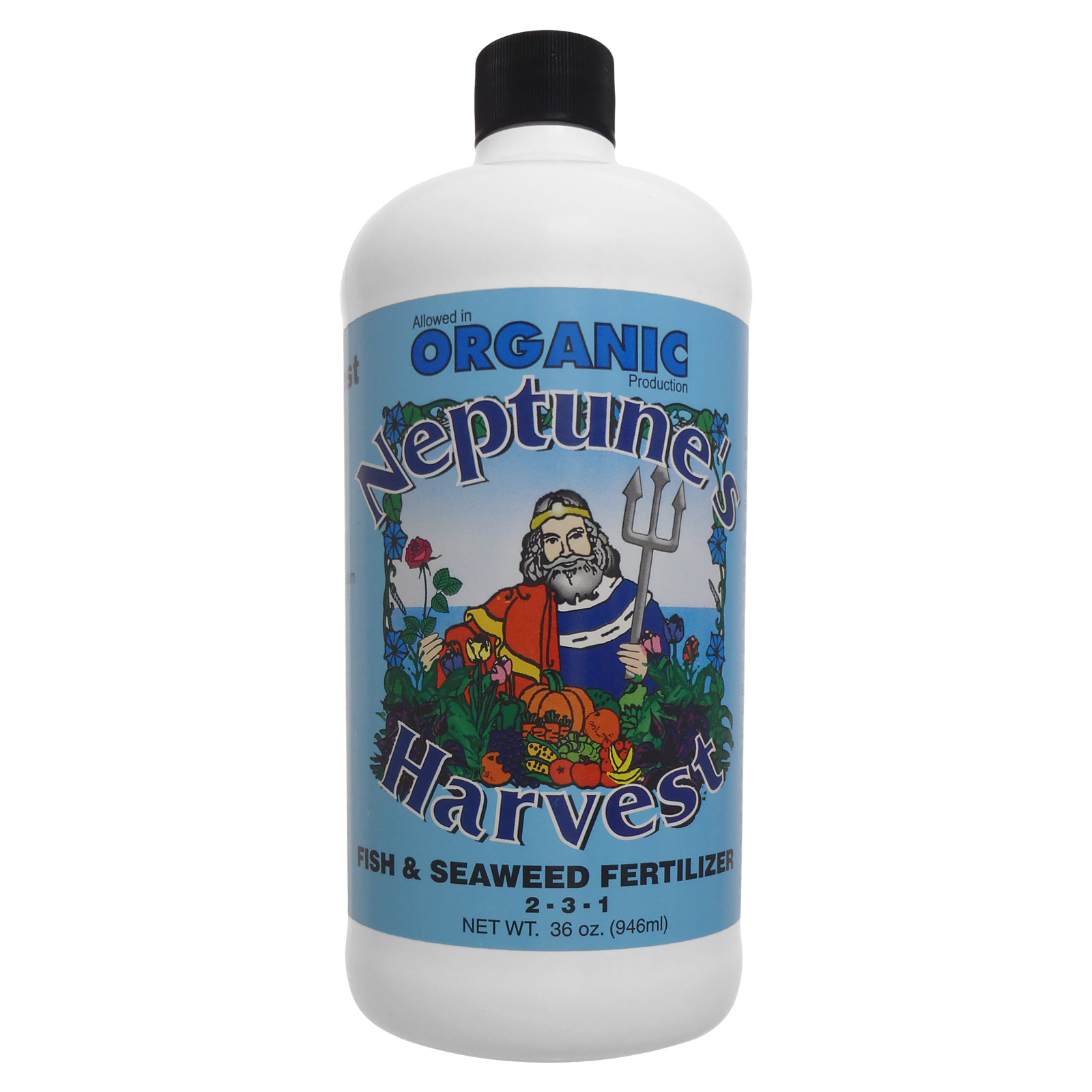
Neptune’s Harvest Fish & Seaweed is an organic all-purpose liquid fertilizer blended with 75% fish and 25% seaweed for consistent feeding. It supports vegetables, flowers, fruit trees, lawns, and indoor plants by providing nutrients in a plant-ready form. The formula helps build organic matter and improve soil structure while promoting strong root development and balanced growth. OMRI Listed, it’s designed for easy mixing and can be used as a soil drench or foliar feed.
Iron Supplementation for Bermuda
Bermuda grass on alkaline soils (pH above 7.0) frequently develops iron chlorosis, producing a yellowing, pale appearance during the summer despite adequate nitrogen. Iron supplementation with Ironite or iron sulfate applied to the foliage corrects chlorosis without the nitrogen surge of a full fertilizer application.
For timing and product guidance on iron supplementation, see Ironite for lawns: how and when to use it.
Soil pH and Bermuda Fertilizer Performance
Bermuda grass performs best at soil pH 6.0 to 7.0. At pH below 5.5, nitrogen, potassium, and other nutrients become less available to roots regardless of how much fertilizer is applied. At pH above 7.5, iron and manganese deficiency becomes common. A soil test every two to three years confirms whether pH correction is needed before investing in the season’s fertilizer program.
For soil pH testing and correction guidance, see how soil pH affects fertilizer performance and lime for lawns: when and how to apply it.