
How Often Should You Fertilize Your Lawn?
Fertilizing your lawn more often than necessary creates as many problems as fertilizing too rarely. Over-fertilization drives excessive shoot growth, increases thatch accumulation, and can cause fertilizer salt burn on roots and foliage. Under-fertilization leaves grass thin, pale, and vulnerable to weed invasion. The right frequency depends on your grass type, the nitrogen source in the product you are using, and the season.
The Governing Principle: Nitrogen Per Year, Not Applications Per Year
The most useful framework for fertilizer frequency is annual nitrogen budget rather than a fixed number of applications. Different grass types have different nitrogen requirements per year, expressed in pounds of actual nitrogen per 1,000 square feet. Distributing that annual budget across the right number of applications, matched to the grass’s active growing periods, is more important than following a fixed schedule.
Understanding how to calculate actual nitrogen per application is covered in lawn fertilizer basics: NPK, types, and how it works.
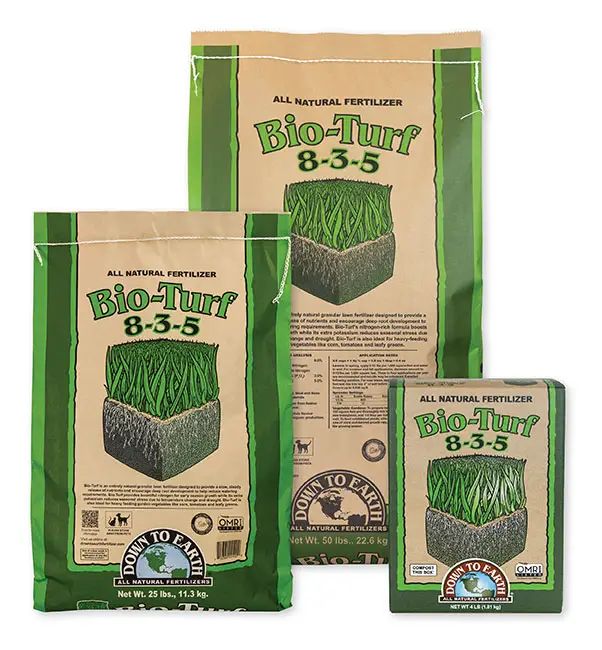
Down to Earth Bio-Turf is an all-natural 8-3-5 organic fertilizer, OMRI listed for use in organic production. It helps encourage deep root development to support greener, stronger growth while reducing watering needs and stress from heat or drought. Ideal for lawns, landscape ornamentals, and heavy-feeding garden vegetables and flowerbeds.
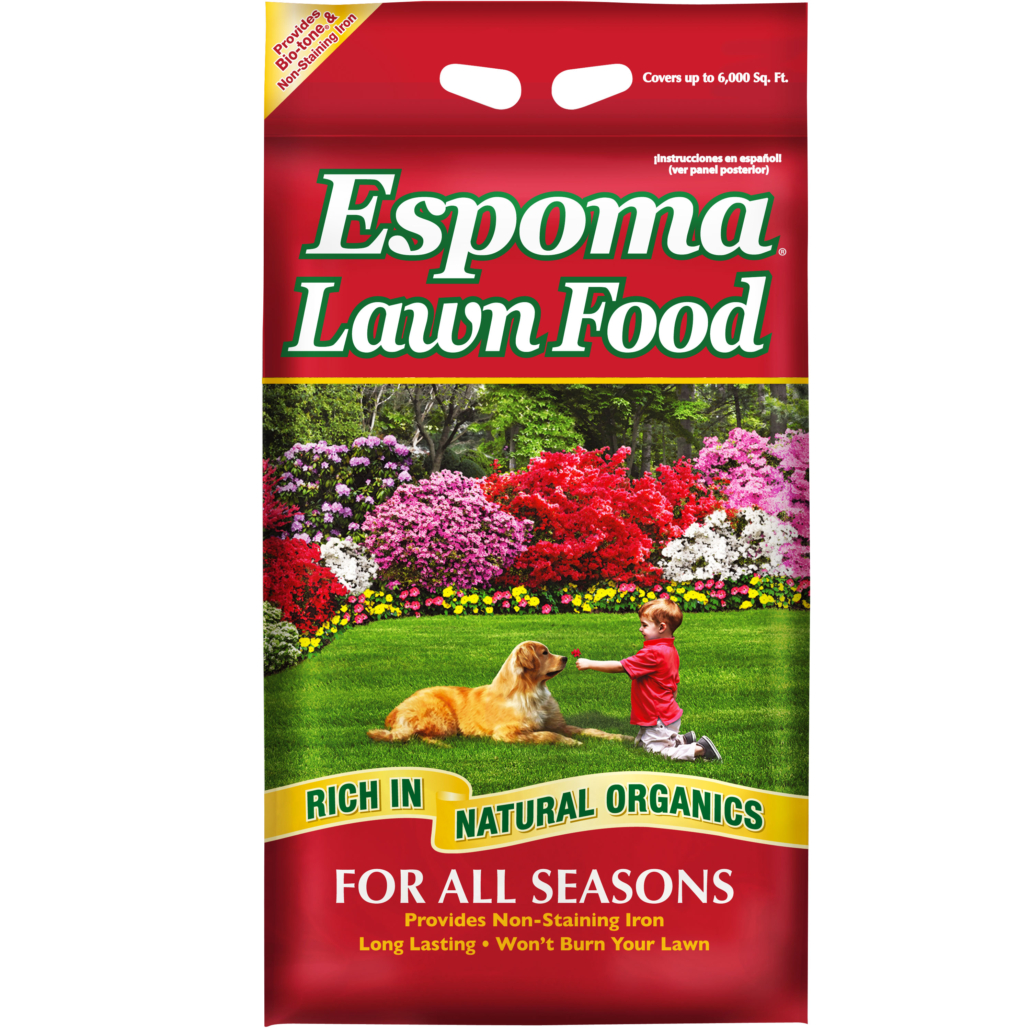
Espoma Lawn Food for All Seasons 15-0-5 provides slow-release, long-lasting nitrogen to help support a greener lawn year-round. Enhanced with iron for deep green color, it helps turn yellow lawns back to green and won’t stain concrete, sidewalks, or driveways. Safe for cool and warm season grasses, it applies in spring, summer, and fall with a drop or broadcast spreader.
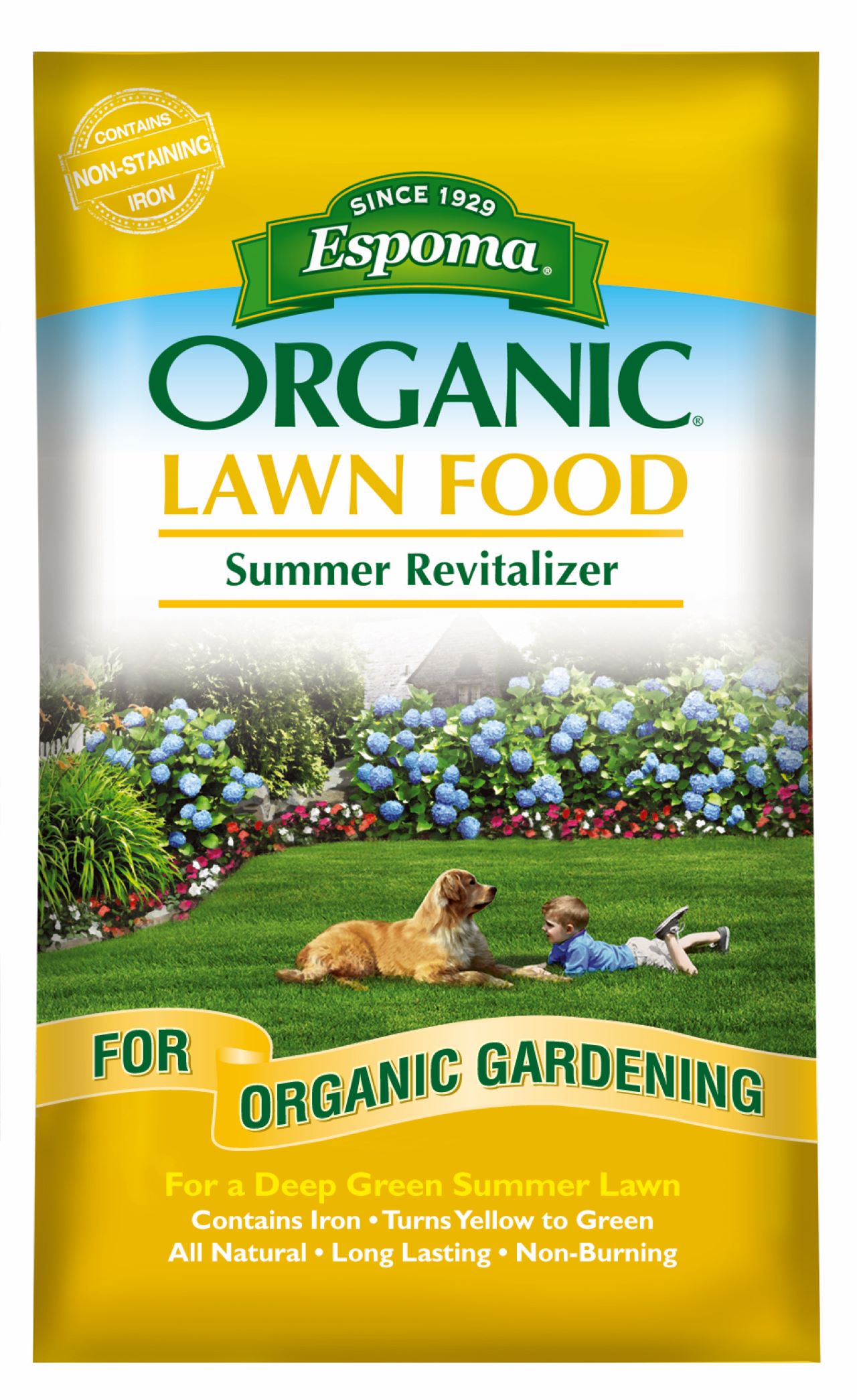
Espoma Organic Lawn Food Summer Revitalizer 8-0-0 delivers long-lasting organic nitrogen to help invigorate lawns during hot weather while adding iron for deep, greener color. Designed for all lawn types and cool- or warm-season grasses, it helps turn yellow lawns back to green without burning or leaching out of soil. Environmentally safe with no sludges or toxic ingredients, it won’t stain concrete, sidewalks, or driveways and is approved as a registered organic input material.
Fertilizer Frequency by Grass Type
Cool-Season Grasses
Cool-season grasses. Kentucky bluegrass, tall fescue, fine fescue, and perennial ryegrass, grow actively in spring and fall and slow or go semi-dormant under summer heat. Their fertilization schedule should reflect this pattern: feed during the active growth periods and withhold or minimize nitrogen during summer stress.
Recommended annual nitrogen: 2 to 4 pounds of actual nitrogen per 1,000 square feet per year, depending on grass species and lawn goals.
Frequency: Two to four applications per year:
- Mid-spring (once the lawn has been mowed two to three times after green-up): Light to moderate application. Too much nitrogen in early spring drives excessive shoot growth at the expense of root development.
- Late spring (optional, if a second spring feed is needed): Light application only, the lawn should be transitioning out of peak spring growth and heading into summer.
- Early fall (September): The most important application of the year for cool-season turf. Supports root development and carbohydrate storage before winter.
- Late fall (November, before dormancy, sometimes called “dormant feeding”):** A light application after growth has slowed but before the ground freezes. Fertilizer stored in the turf is available for early spring green-up.
For homeowners fertilizing only twice per year, focus on early fall and mid-spring. These two applications capture the most benefit for the least risk on cool-season turf.
Warm-Season Grasses
Warm-season grasses. Bermuda, Zoysia, St. Augustine, Centipede, grow actively from late spring through summer and go dormant in fall. Their fertilization schedule is essentially the inverse of cool-season timing.
Recommended annual nitrogen:
- Bermuda grass: 3 to 6 pounds per 1,000 square feet per year (one of the highest nitrogen demands of any home lawn grass)
- Zoysia: 2 to 3 pounds per 1,000 square feet per year
- St. Augustine: 2 to 4 pounds per 1,000 square feet per year
- Centipede: 1 to 2 pounds per 1,000 square feet per year (one of the lowest demands, over-fertilization is a common mistake on Centipede)
Frequency: Two to four applications per year:
- Late spring (after dormancy break, lawn actively growing): First application of the season.
- Early summer: Second application for high-demand grasses like Bermuda.
- Mid-summer (optional, Bermuda and Zoysia only): Third application if the lawn shows nitrogen deficiency or if the mowing season is long.
- Do not fertilize in fall once warm-season grasses are approaching dormancy. Late-season nitrogen delays dormancy and increases cold damage risk.
How Nitrogen Source Affects Frequency
The form of nitrogen in your fertilizer directly affects how long each application feeds the lawn and therefore how often you need to reapply.
Quick-release nitrogen (urea, ammonium sulfate): Feeds the lawn for two to four weeks. Requires more frequent applications to maintain consistent nutrition. Carries higher burn risk at each application.
Slow-release nitrogen (polymer-coated urea, sulfur-coated urea, IBDU): Feeds the lawn for six to twelve weeks. Fewer applications are needed to cover the full growing season. Lower burn risk per application.
Organic nitrogen (Milorganite, feather meal, biosolids): Feeds the lawn for six to ten weeks in warm soil. Safe to apply more frequently than synthetic products without burn risk, though the slow release rate makes it inefficient to apply more than every six to eight weeks.
If you use a slow-release synthetic fertilizer (look for 50% or higher slow-release content on the label), two to three applications per season are generally sufficient for most lawns. If you use a quick-release fertilizer, you may need four to six applications per season to maintain consistent nutrition without relying on large doses that risk burn.
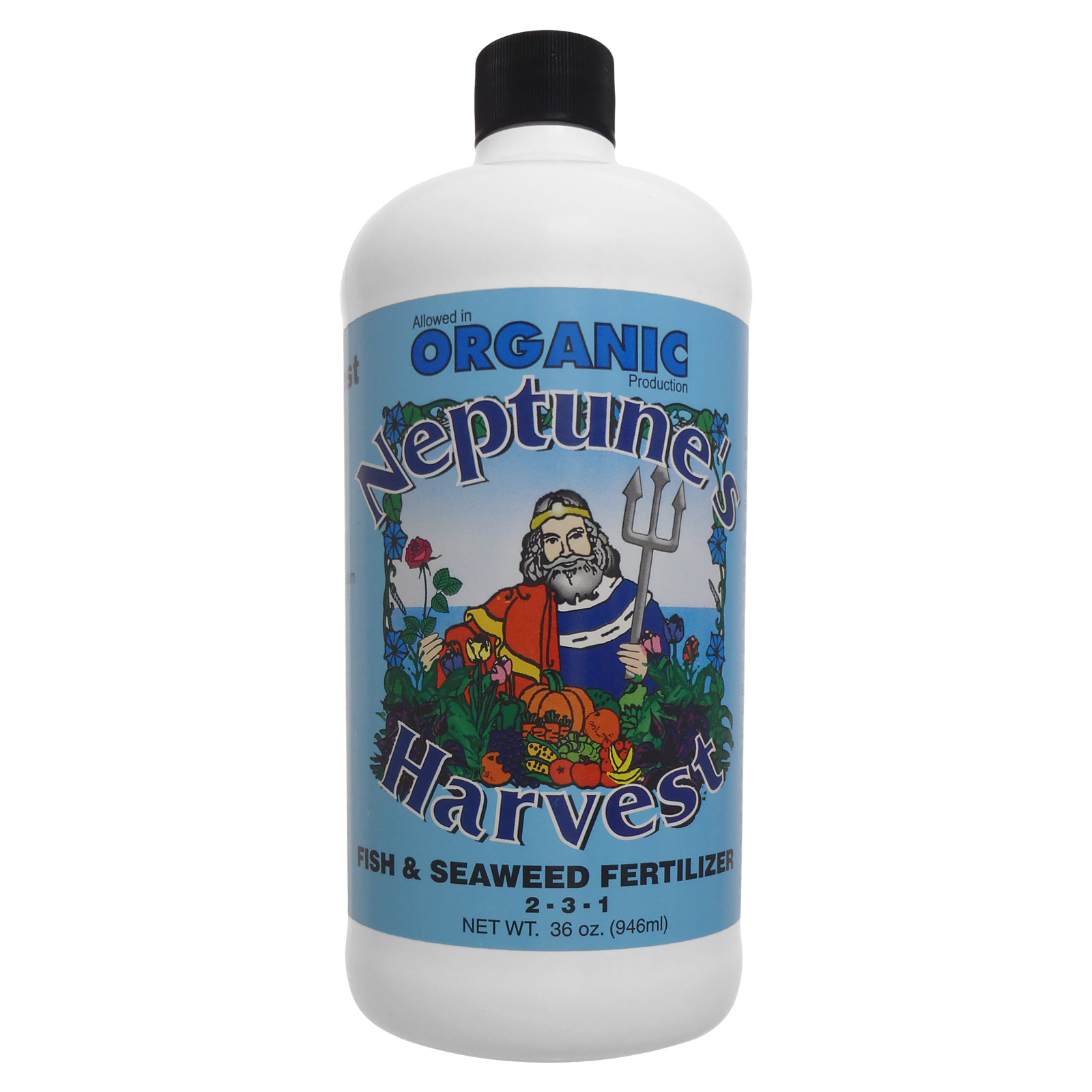
Neptune’s Harvest Fish & Seaweed is an organic all-purpose liquid fertilizer blended with 75% fish and 25% seaweed for consistent feeding. It supports vegetables, flowers, fruit trees, lawns, and indoor plants by providing nutrients in a plant-ready form. The formula helps build organic matter and improve soil structure while promoting strong root development and balanced growth. OMRI Listed, it’s designed for easy mixing and can be used as a soil drench or foliar feed.
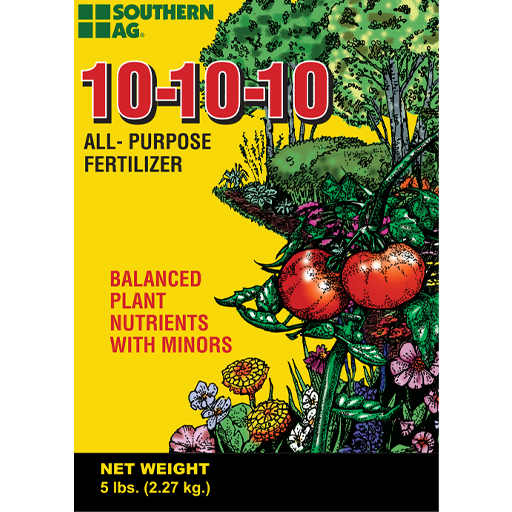
Southern Ag All Purpose Granular Fertilizer 10-10-10 helps nourish lawns, flower beds, vegetables, and trees with a balanced blend of essential nutrients. The granular formula is designed for easy application and supports healthy growth across a wide range of plants and seasons. Follow label directions to sweep off any granules from hard surfaces and water plants well after applying.
Signs That Your Lawn Needs Fertilizing
Rather than following a rigid calendar schedule, you can use the lawn itself as a guide:
- Pale green or yellow-green color: Nitrogen deficiency is the most likely cause on an otherwise healthy lawn. The grass loses its deep green color when nitrogen is limiting.
- Slow growth and thin cover: Under-fertilized turf thins out over time and provides less competition for weeds.
- Slow response after mowing: Well-fertilized grass rebounds visibly within a few days after mowing. Nitrogen-deficient grass grows more slowly and stays mowed-looking longer.
These signs should be interpreted in context. Pale grass in summer heat may be heat and drought stress rather than a fertilizer deficiency. A soil test will confirm whether nitrogen, pH, or another soil factor is the limiting variable.
Signs You Are Fertilizing Too Often
- Rapid surge of bright green growth followed by browning: Quick-release nitrogen overload
- Thatch buildup: Excessive shoot growth produces more organic material than the soil can decompose, accumulating as thatch
- Increased disease susceptibility: Lush, rapidly growing grass is more vulnerable to fungal diseases including brown patch, dollar spot, and leaf spot
- Soft, weak leaf blades: Over-stimulated grass produces high water-content leaf tissue that is more vulnerable to drought stress and disease
Summary: Application Frequency by Grass Type
| Grass Type | Applications Per Year | Key Windows |
|---|---|---|
| Kentucky bluegrass | 3 to 4 | Mid-spring, early fall, late fall |
| Tall fescue | 2 to 3 | Mid-spring, early fall |
| Fine fescue | 2 | Mid-spring, early fall (low nitrogen demand) |
| Perennial ryegrass | 3 to 4 | Mid-spring, early fall, late fall |
| Bermuda grass | 3 to 5 | Late spring, summer (high nitrogen demand) |
| Zoysia | 2 to 3 | Late spring, early summer |
| St. Augustine | 2 to 4 | Late spring, summer |
| Centipede | 1 to 2 | Late spring only (very low nitrogen demand) |
For a full calendar-based plan matched to these windows, see lawn fertilizer schedule by season and grass type.