
Best Organic Lawn Fertilizer
Organic lawn fertilizers release nitrogen through microbial breakdown in the soil rather than through water solubility, which means they feed more slowly and steadily than synthetic quick-release products. This slower release profile reduces the risk of fertilizer burn, builds soil biology over time, and makes organic nitrogen sources a reliable option for homeowners who want a low-risk fertilization program or who are managing sensitive grass types.
How Organic Nitrogen Release Works
Organic nitrogen sources contain nitrogen in organic molecules that soil bacteria and fungi must break down before the nitrogen becomes available to grass roots. This microbial decomposition process means that organic fertilizer performance is directly tied to soil temperature and biological activity. In warm, biologically active soil (above 55 degrees Fahrenheit), organic nitrogen releases reliably. In cold or dry soil, release slows significantly.
This has a practical implication for timing: organic fertilizers applied in early spring before soil temperatures have risen above 50 degrees Fahrenheit will sit in the soil with minimal release until conditions warm up. For cold-climate cool-season lawns, applying organic fertilizer once soil temperatures are consistently above 55 degrees Fahrenheit produces a faster and more predictable green-up response.
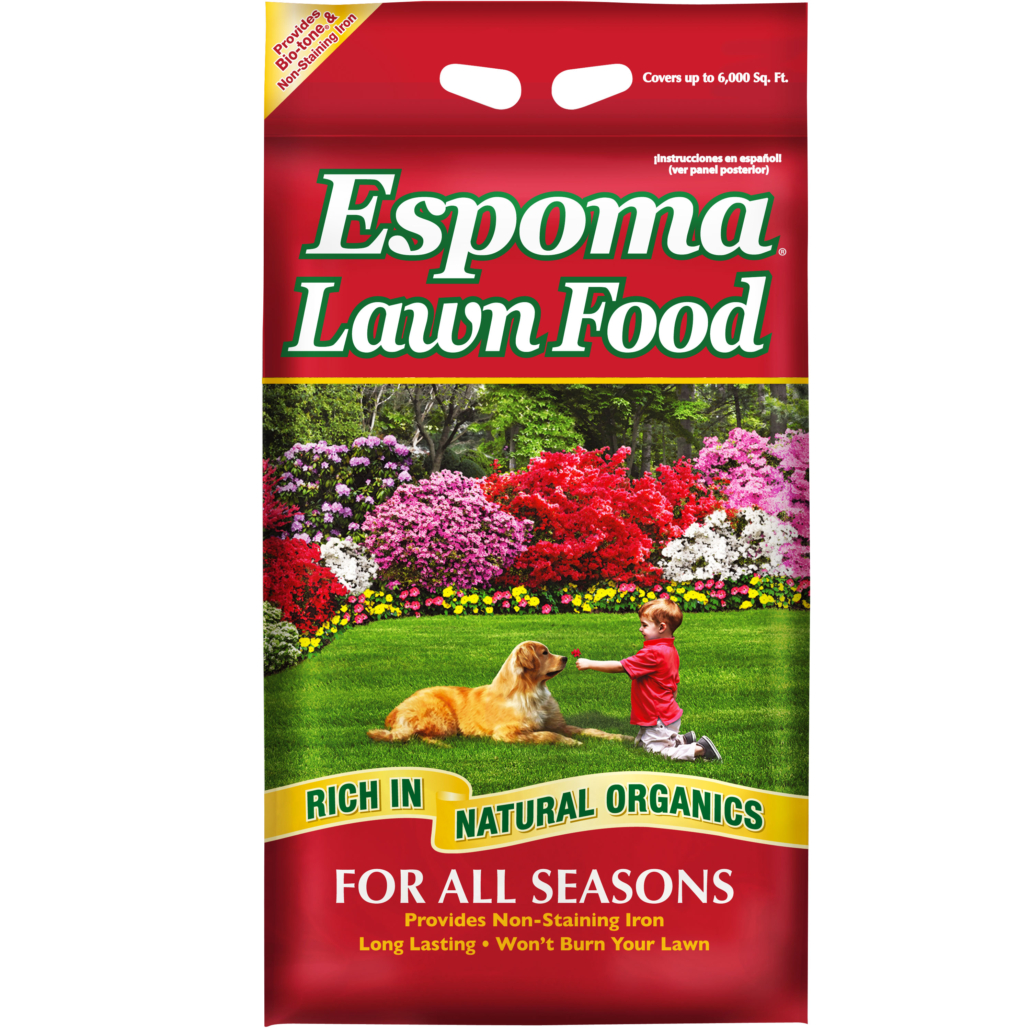
Espoma Lawn Food for All Seasons 15-0-5 provides slow-release, long-lasting nitrogen to help support a greener lawn year-round. Enhanced with iron for deep green color, it helps turn yellow lawns back to green and won’t stain concrete, sidewalks, or driveways. Safe for cool and warm season grasses, it applies in spring, summer, and fall with a drop or broadcast spreader.
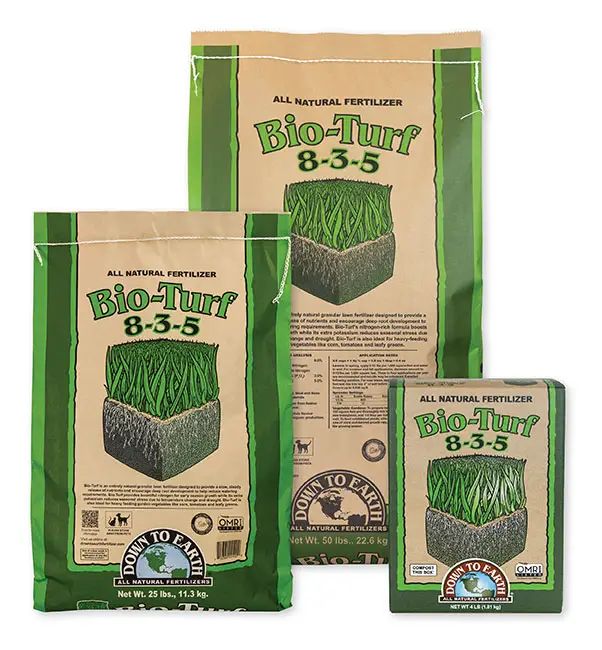
Down to Earth Bio-Turf is an all-natural 8-3-5 organic fertilizer, OMRI listed for use in organic production. It helps encourage deep root development to support greener, stronger growth while reducing watering needs and stress from heat or drought. Ideal for lawns, landscape ornamentals, and heavy-feeding garden vegetables and flowerbeds.
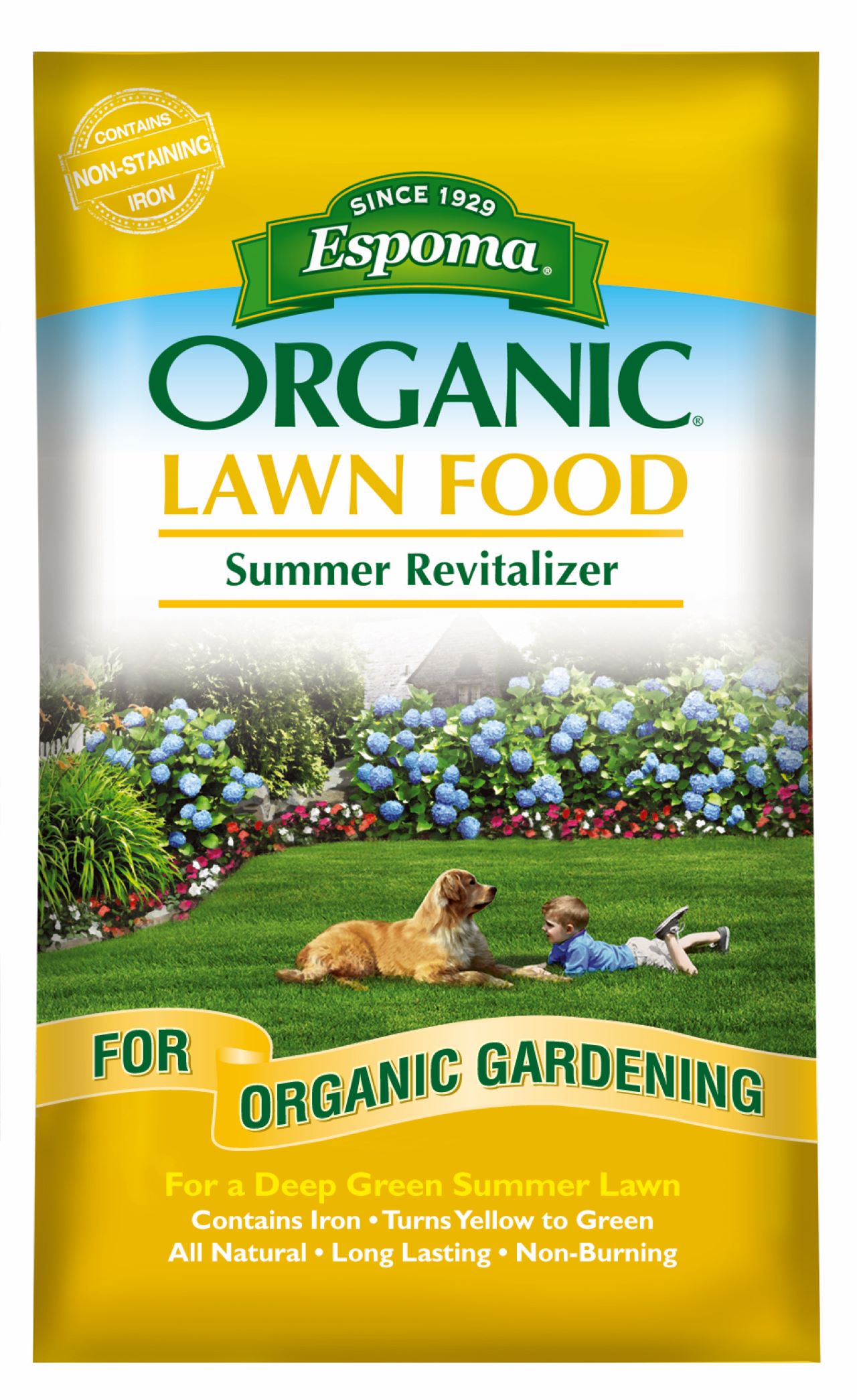
Espoma Organic Lawn Food Summer Revitalizer 8-0-0 delivers long-lasting organic nitrogen to help invigorate lawns during hot weather while adding iron for deep, greener color. Designed for all lawn types and cool- or warm-season grasses, it helps turn yellow lawns back to green without burning or leaching out of soil. Environmentally safe with no sludges or toxic ingredients, it won’t stain concrete, sidewalks, or driveways and is approved as a registered organic input material.
Best Organic Lawn Fertilizers
Milorganite (6-4-0)
Nitrogen type: Biosolids-based organic nitrogen, slow-release NPK: 6-4-0 Contains iron: Yes (approximately 2.5% iron) Safe for all grass types: Yes
Milorganite is the most widely recognized and consistently available organic lawn fertilizer in the US. Made from heat-dried microbes from Milwaukee’s water reclamation process, it delivers slow-release organic nitrogen alongside phosphorus and iron in a single granular product that is safe for all grass types, has no risk of fertilizer burn, and can be applied in almost any season when the grass is actively growing.
The iron content in Milorganite contributes to the deep green color response that many homeowners associate with the product, iron enhances chlorophyll production without the shoot growth surge that high nitrogen causes.
At 6-4-0 NPK, Milorganite must be applied at higher rates than synthetic fertilizers to deliver equivalent nitrogen. The standard rate of 32 pounds per 5,000 square feet delivers approximately 0.86 pounds of actual nitrogen per 1,000 square feet, which is within the normal feeding range for most turf types.
Best use: Year-round organic lawn feeding, new lawns, sensitive warm-season grasses, households where burn risk is a concern
For timing guidance specific to this product, see when to use Milorganite on your lawn.
Espoma Organic Lawn Food (9-0-0)
Nitrogen type: Feather meal, blood meal, sulfate of potash NPK: 9-0-0 (feather meal base formulation varies) Safe for all grass types: Yes
Espoma’s organic lawn food products use feather meal as the primary nitrogen source, which releases nitrogen more quickly than biosolids-based products at comparable soil temperatures. Feather meal nitrogen can become available within two to three weeks in warm soil, making Espoma a useful organic option for homeowners who want organic nutrition with a somewhat faster response than Milorganite.
Best use: Organic spring and fall feeding on established cool-season and warm-season turf
Dr. Earth Super Natural Lawn Fertilizer (9-0-5)
Nitrogen type: Alfalfa meal, feather meal, fish bone meal NPK: 9-0-5 Contains beneficial soil microbes: Yes (mycorrhizae, beneficial bacteria) Safe for all grass types: Yes
Dr. Earth’s formulation includes a diverse package of nitrogen sources that release at different rates, producing a more extended feeding window than single-source organic products. The addition of mycorrhizal fungi and beneficial bacteria to the granules is intended to support soil biology alongside nutrient delivery. The 9-0-5 ratio makes it particularly useful for fall applications where potassium support for winter hardiness is a goal.
Best use: Organic fall feeding, lawns on sandy or depleted soils where building soil biology is a priority
Jonathan Green Love Your Lawn + Love Your Soil (10-0-1)
Nitrogen type: Chicken manure, sulfate of ammonia blend NPK: 10-0-1 Contains bio-stimulants: Yes (humates, bio-stimulants)
Jonathan Green’s organic-based product combines a slightly higher nitrogen percentage with humates and bio-stimulants designed to support soil structure and microbial activity. The 10-0-1 ratio delivers adequate nitrogen without the high phosphorus of some older organic products, and the inclusion of humates supports soil water retention in sandy or compacted lawns.
Best use: Spring feeding on cool-season lawns in the Northeast, where Jonathan Green has strong product refinement for regional conditions
Compost as Supplemental Organic Nitrogen
Compost is not typically sold as a fertilizer but functions as a slow-release organic amendment that supplies small amounts of nitrogen, phosphorus, potassium, and a broad range of micronutrients alongside organic matter that improves soil structure. Top-dressing a lawn with quarter-inch of mature compost in fall or spring is a low-cost way to supplement organic fertility while improving soil biology and moisture retention.
Compost nitrogen percentages are low (typically 1 to 3%), so it should not be relied upon as a primary nitrogen source but works well in combination with a standard organic fertilizer.
Comparing Organic and Synthetic Fertilizers
| Factor | Organic | Synthetic |
|---|---|---|
| Burn risk | Very low | Moderate to high (quick-release) / Low (slow-release) |
| Response speed | Slow to moderate (temperature-dependent) | Fast (quick-release) / Gradual (slow-release) |
| Soil biology impact | Positive (feeds soil microbes) | Neutral to slightly negative at high rates |
| Application rate | Higher (lower NPK percentage) | Lower (higher NPK percentage) |
| Cost per nitrogen unit | Generally higher | Lower for synthetic, competitive for quality organic |
| Safe for new lawns | Yes | With care (slow-release preferred) |
| Safe for all grass types | Yes | Varies by formulation |
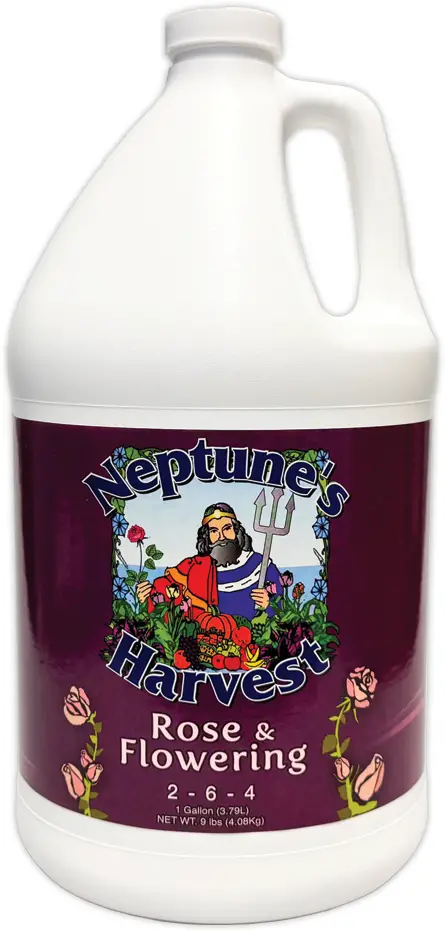
Neptune’s Harvest Rose & Flowering Fertilizer (2-6-4) is an organic liquid rose food that supports strong roots and helps produce vibrant, fuller blooms. It boosts bud density and flower volume while promoting healthy foliage for indoor and outdoor plants. Formulated with natural ingredients, it can be applied to soil or used as a foliar feed to improve flowering performance.
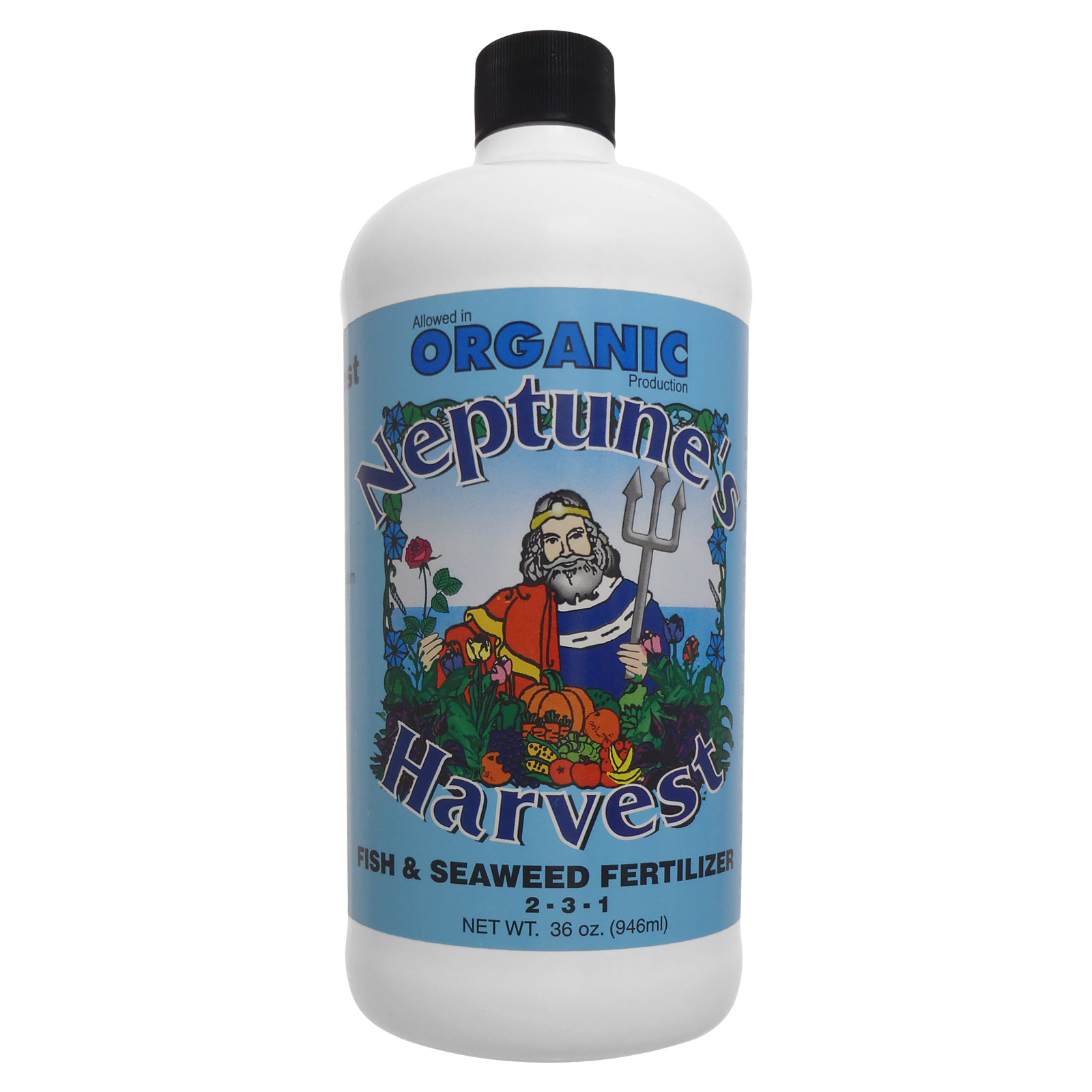
Neptune’s Harvest Fish & Seaweed is an organic all-purpose liquid fertilizer blended with 75% fish and 25% seaweed for consistent feeding. It supports vegetables, flowers, fruit trees, lawns, and indoor plants by providing nutrients in a plant-ready form. The formula helps build organic matter and improve soil structure while promoting strong root development and balanced growth. OMRI Listed, it’s designed for easy mixing and can be used as a soil drench or foliar feed.
Application Notes for Organic Fertilizers
Organic fertilizers require watering in after application to begin the microbial activation process. Unlike synthetic granular fertilizers where the risk of applying to dry conditions is primarily about root burn from concentrated salts, organic products do not carry significant burn risk but still need moisture to reach the soil and initiate decomposition.
Apply in mild temperatures when the soil is biologically active. Avoid applying in early spring before soil temperatures reach 50 degrees Fahrenheit, as the microbial release mechanism will not function effectively until soil biology is active.
For a full seasonal schedule for organic and conventional fertilizer use, see lawn fertilizer schedule by season and grass type.