
If you are planning a driveway, a base layer, or a pathway and trying to decide between crusher run and gravel, the choice comes down to understanding what each material actually does under load. They look similar in a photograph, but they behave very differently once spread and used.
This guide compares the two materials directly across the factors that matter most for residential and small property projects: surface stability, drainage, cost, and the specific situations where each one performs best.
How the Materials Differ at a Fundamental Level
The most important difference between crusher run and gravel is not the size of the particles. It is the shape of the particles and what happens to them under pressure.
Natural gravel is rounded. Water erosion smooths the edges over long periods, producing stones that roll against each other easily rather than locking together. That roundness is what gives gravel its characteristic loose, shifting feel underfoot. It is difficult to compact into a stable surface because the rounded particles simply roll past each other under pressure.
Crusher run is angular. The particles are produced by mechanically fracturing rock, which creates sharp, irregular faces. Those angular faces interlock when pressed together, resisting movement. Add to that the fine dust and small fragments in the mix, which fill the voids between larger particles and bind the whole mass together under compaction, and you have a material that behaves much more like a manufactured road surface than a loose aggregate.
For a more detailed breakdown of exactly what crusher run is made of and how the fines content works, our guide to what crusher run is covers the material fundamentals in full.
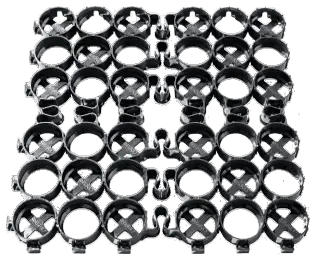
TRUEGRID PRO LITE permeable pavers are lightweight, DIY-friendly driveway and outdoor base pavers that install easily for a variety of projects. Made in the USA from 100%...
Surface Stability
On a driveway or pathway that carries regular foot traffic or vehicle loads, surface stability is typically the most important practical consideration.
Gravel does not compact into a bound surface. A gravel driveway remains loose at the surface indefinitely, which means it shifts underfoot, displaces under turning vehicle tires, and migrates toward the edges over time. Edging is essential to contain it, and regular raking and top-dressing are ongoing maintenance tasks. A well-maintained gravel driveway can look attractive, but the surface never becomes truly firm.
Crusher run, by contrast, compacts under a plate compactor or roller into a surface that becomes progressively firmer over time as traffic and weather cycles drive the fines deeper into the mix. A properly installed and compacted crusher run driveway has far less surface movement than loose gravel and requires less frequent regrading. Our crusher run driveway guide walks through the installation process that produces this result.
The stability advantage of crusher run is most significant on slopes. Rounded gravel washes down a slope easily in heavy rain. Crusher run holds much better because the compacted fines bind the surface, though very steep grades still require additional measures. If slope stability is a concern, our page on whether crush and run washes away covers what grades are manageable and what precautions help.
Drainage
This is where gravel holds a clear advantage over crusher run.
Because natural gravel consists of rounded particles with no fines filling the gaps, water passes through it freely. A gravel driveway or pathway drains quickly and is unlikely to hold standing water on the surface.
Crusher run drains less freely once compacted because the fines fill the void spaces between particles. The denser the compaction, the lower the permeability. This is rarely a problem for a well-graded driveway that has been installed with a correct cross-slope to direct water off the surface, but it does mean that crusher run is not appropriate where a free-draining sub-base material is specifically required.
For a detailed look at how crusher run performs under wet conditions and what to do if drainage is a concern, our crusher run drainage guide explains the permeability trade-offs in practical terms.
If drainage is the primary goal for your project, clean crushed stone such as #57 or #8 is a better fit than either crusher run or natural gravel. The crushed stone vs gravel comparison covers that broader choice if you are still working through your material options.
Cost
Crusher run and standard crushed gravel are typically priced in a similar range when bought in bulk. Both are generally sold by the ton, with prices varying by region, material type (limestone crusher run is usually cheaper than granite), and delivery distance.
Decorative gravel, including colored pea gravel or river stone, is typically more expensive than crusher run of equivalent volume because of the additional processing involved.
For a full breakdown of what crusher run costs per ton and per cubic yard alongside the factors that affect regional pricing, our crusher run cost guide gives current figures and a comparison against other common driveway materials.
Which to Use and When
Neither material is better in every situation. The right choice depends on what you need the surface to do.
Choose crusher run when:
- You need a stable, firm driveway surface that handles regular vehicle traffic
- You are building a base layer under pavers, concrete, or a shed pad
- The site has a gentle to moderate slope and you need the surface to stay in place
- You want a surface that hardens over time and requires minimal regrading
Choose gravel when:
- Free drainage is the top priority, such as around a foundation or in a garden bed
- You want a surface that is easy to reshape or expand without heavy equipment
- Appearance matters and you want the color and texture options that decorative gravel provides
- The project is a pathway or low-traffic area where surface firmness is less critical
For projects where the decision involves pea gravel specifically, our pea gravel vs crushed stone comparison covers that specific pairing in more detail.
A Note on Maintenance Differences
Gravel driveways require regular maintenance because the surface never binds. Raking displaced material back to the center, adding fresh top-dressing annually, and managing weed growth through the surface are all recurring tasks. Our gravel driveway maintenance guide sets out a practical schedule.
Crusher run driveways require less frequent regrading once the surface has settled and hardened, but they are not maintenance-free. Potholes and ruts can develop where the base layer was not compacted correctly or where water has eroded the surface. The section in our crusher run driveway guide on long-term performance covers what to watch for.
Frequently Asked Questions
Is crusher run better than gravel for a driveway?
For most residential driveways that carry regular vehicle traffic, crusher run outperforms loose gravel because it compacts into a stable surface rather than shifting underfoot. Gravel is a better choice where drainage is the top priority or where a looser, easier-to-reshape surface is preferred.
Is crusher run cheaper than gravel?
Crusher run is generally comparable in price to standard crushed stone and is often cheaper than decorative gravel. Prices vary by region and supplier, but crusher run is rarely the more expensive option when buying in bulk for a driveway or base application.
Can you mix crusher run and gravel?
You can, but it is not recommended for driveways or structural base layers. Mixing rounded gravel into crusher run reduces the compaction performance because the rounded particles disrupt the angular interlock and fines binding that make crusher run stable.