
Composting Leaves: How to Use Fall Leaves as Browns
Autumn leaves are one of the most valuable free composting resources available to homeowners with trees. They are high in carbon, available in large quantities each fall, and when stored correctly can provide the brown material a pile needs to balance nitrogen-rich kitchen scraps and grass clippings throughout the year. The main challenge with leaves is managing the tendency of certain species to mat together when wet, and adjusting for the very slow decomposition rate of some leaf types.
Leaf C:N Ratios and Decomposition Rates
Leaves vary in their carbon-to-nitrogen ratio and decomposition rate depending on the species. Most deciduous leaves fall in the range of 40:1 to 80:1 C:N ratio, making them firmly in the brown category.
However, decomposition rates vary significantly. Oak leaves are among the slowest to break down due to their high tannin content and waxy cuticle. Beech and hornbeam leaves also decompose slowly. Maple, ash, cherry, and many fruit tree leaves break down faster. Shredding any leaf type dramatically accelerates breakdown by increasing surface area and reducing the structural integrity of the leaf that resists microbial penetration.
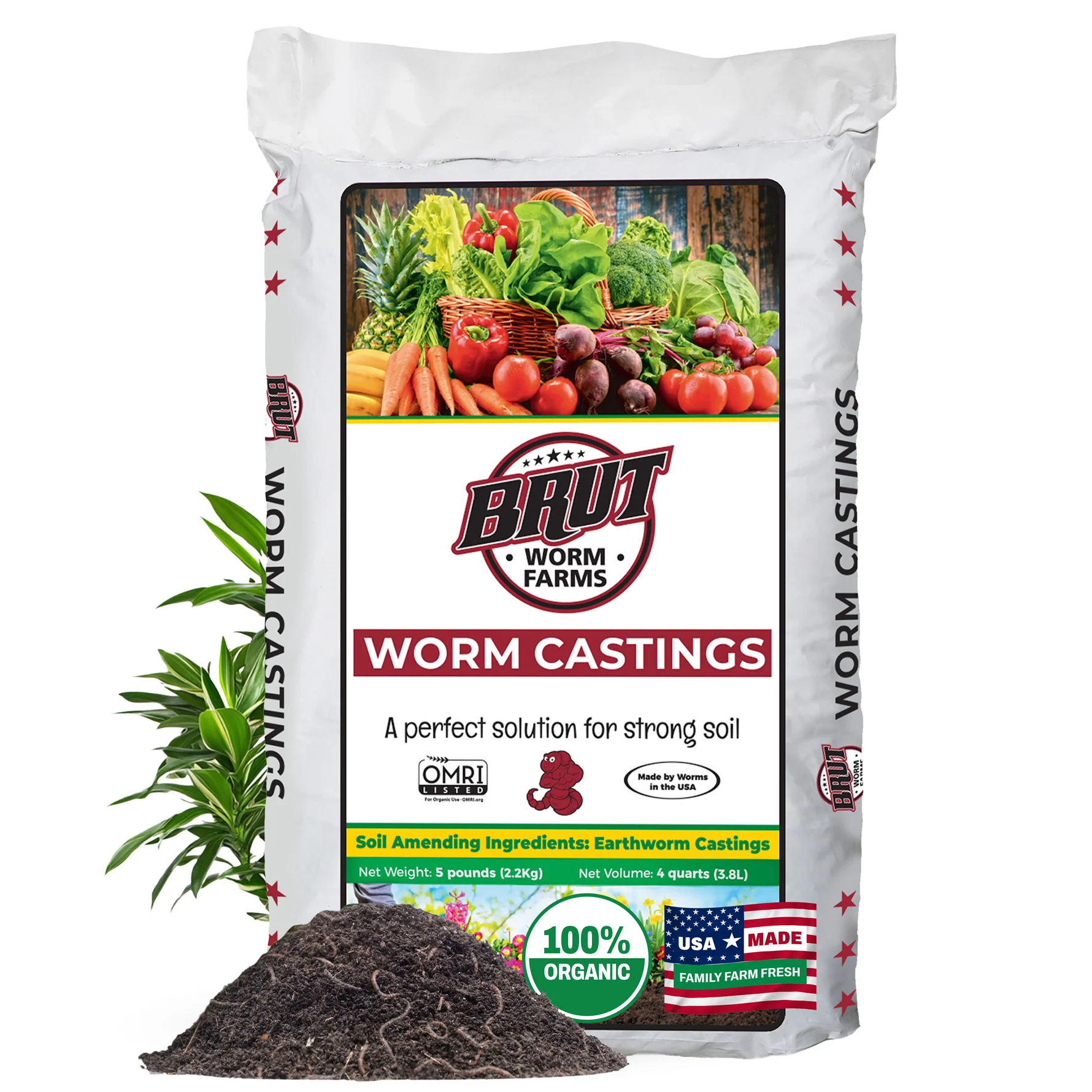
Brut organic worm castings provide mineral-rich, certified organic nutrition to supercharge indoor and outdoor plants. Raised indoors in containers for purity, these castings support lush greenery, vibrant blooms, and bountiful harvests. OMRI and CDFA listed formula helps deliver nature’s nutrients directly to plant roots for healthy growth from root to leaf.
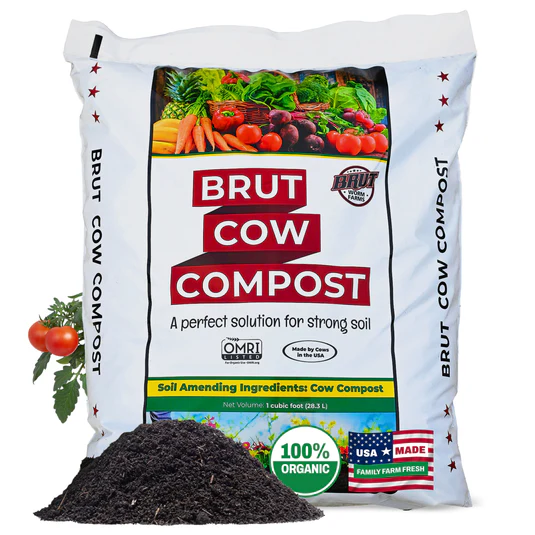
Brut Cow Compost is a nutrient-rich organic soil amendment made from 100% pure, thoroughly composted cow manure. It enriches soil with nitrogen, calcium, and iron, supports beneficial microbial life, and helps plants produce stronger growth. Odor-free and gentle on roots, it can be used for vegetables, flowers, lawns, shrubs, and indoor plants as a top dressing or mixed into garden and potting soil.
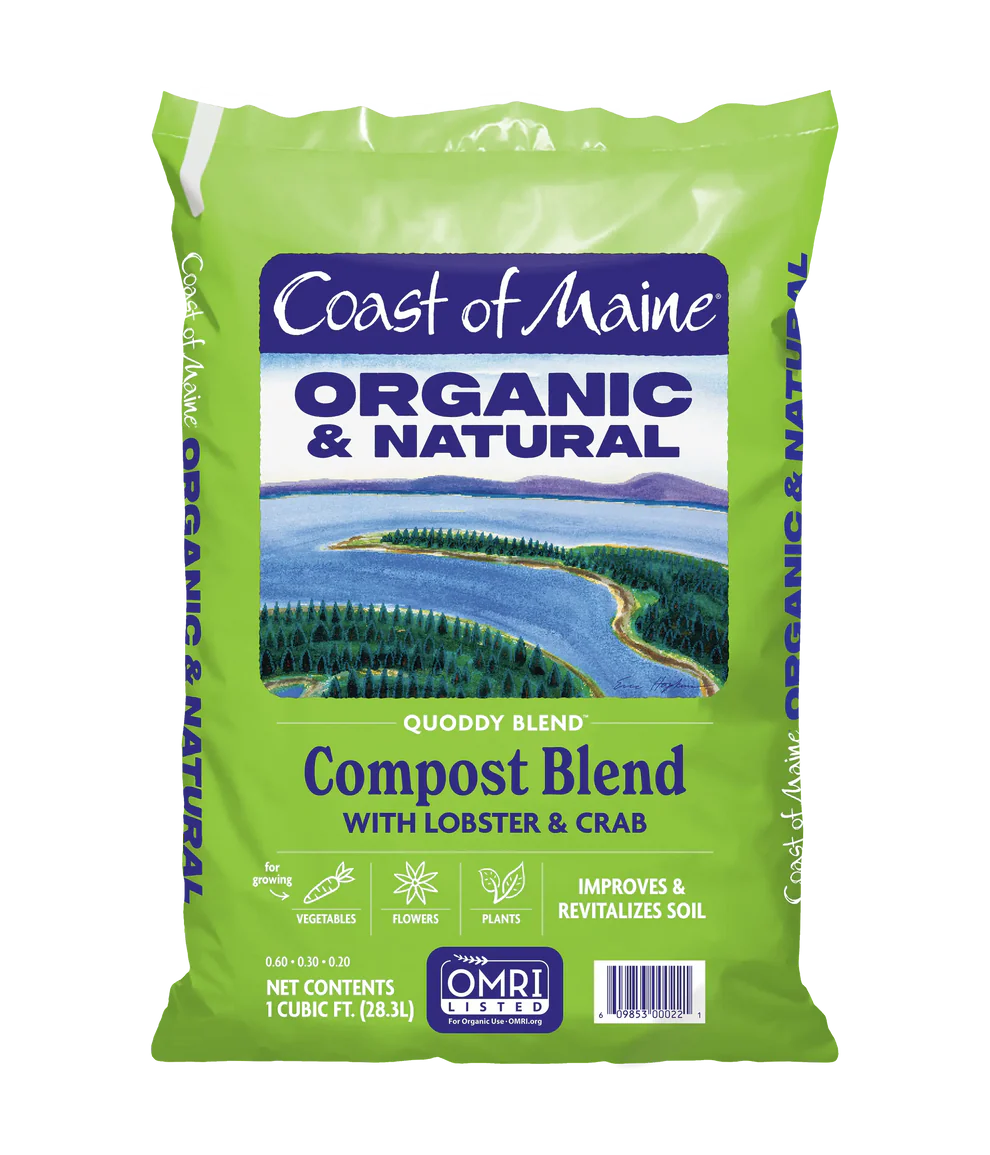
Coast of Maine’s Organic & Natural Quoddy Blend is a premium seafood compost made from lobster and crab shell meal, composted manure, and peat moss to enrich garden soil. It improves soil structure by supporting better drainage, aeration, and water retention for healthier root development. OMRI listed for organic use, it’s a versatile choice for gardens, beds, borders, trees, shrubs, and foliage.
The Matting Problem
Wet leaves, particularly large flat leaves from species like sycamore and horse chestnut, mat together into dense impermeable layers when added to a compost pile in bulk. The mat resists wetting, blocks airflow, and dramatically slows decomposition of both the leaves themselves and the material beneath them. The solution is shredding and mixing rather than layering.
Run leaves over with a lawn mower to shred them before adding to the pile, or use a leaf shredder or vacuum with a shredding function. Shredded leaves integrate with other pile material, do not mat, and begin decomposing within a few weeks in an active pile.
Storing Leaves for Year-Round Use
Collecting and storing a large quantity of autumn leaves allows you to draw on a brown carbon source throughout the year when the pile needs balancing against spring grass clippings and summer kitchen scraps. Store shredded leaves in bags, bins, or an open leaf corral (a simple wire mesh enclosure). Keep them covered to prevent them from blowing away and to maintain a manageable moisture level.
Stored leaves that become wet and compressed into a solid mass can be broken apart with a fork before use. Slightly moist stored leaves are ideal: they integrate easily and begin decomposing immediately when added to an active pile.
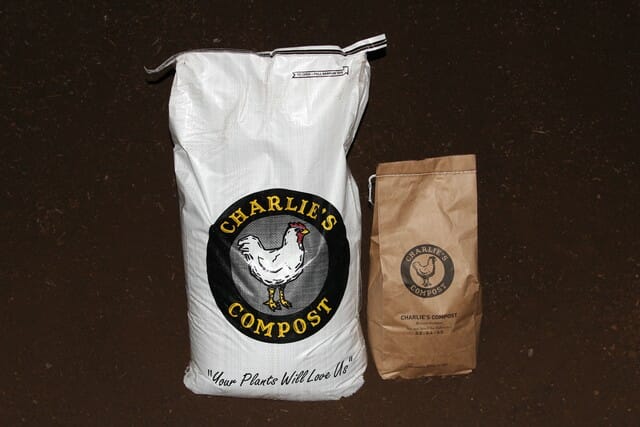
Charlie's Compost is an odor-free organic compost that enriches soil with nutrients and improves soil structure for healthier plant growth. It’s ideal for home gardens, raised beds, containers, and seed starting mixes, and it works as a compost tea ready amendment. The formula supports continuous nutrient release and offers low-odor composting for small-space and indoor-friendly use.
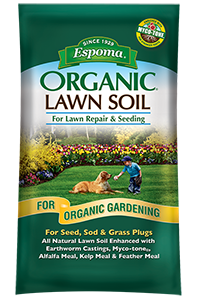
Espoma Organic Lawn Soil is an all-natural organic soil mix designed to promote seed germination and help new sod establish. It contains earthworm castings, alfalfa meal, kelp meal, and feather meal, enhanced with Espoma MYCO-TONE, a blend of endo and ecto mycorrhizae fungi. Use it anytime you sow new grass seed or install sod for organic gardening results with no synthetic plant foods or chemicals.
Leaf Mold: A Separate and Valuable Product
Leaves composted on their own without added greens, in a dedicated leaf pile or bin, produce leaf mold rather than standard compost. Leaf mold is not as nutrient-rich as finished compost, but it is an excellent soil conditioner and mulch material with high water-retention capacity. It forms naturally as autumn leaves decompose over one to two years without any management. Shredding speeds the process to six to twelve months.