
How to Get Rid of Clover Mites Inside and Outside
Clover mites (Bryobia praetiosa) are a nuisance mite problem rather than a structural pest or a human health risk, but the sheer numbers in which they invade homes during spring and fall migrations make them one of the most alarming mite encounters a homeowner is likely to experience. Hundreds or thousands of tiny reddish-brown mites streaming across siding, window frames, and exterior walls are startling, and once they find their way inside, they leave reddish stains when crushed that can mark window sills, curtains, and light-colored walls. Understanding their biology explains why the invasion happens, why it stops on its own, and which control steps actually address the problem.
Identifying Clover Mites
Clover mites are among the larger mites homeowners encounter, though still tiny at about 0.75 mm long. They are oval-bodied with a characteristic feature that distinguishes them from most other mites: the front pair of legs is significantly longer than the other three pairs, extending forward like antennae when the mite is in motion. Their color ranges from olive green to reddish brown and turns bright red after feeding. This red coloration, combined with the reddish stain they leave when crushed, is the most consistent identification feature at the scale visible to the naked eye.
Clover mites do not bite humans, do not transmit disease, do not damage structural materials, and do not reproduce indoors. Mites that enter the home die within a few days from desiccation in the low humidity of heated or cooled interior spaces. The indoor invasion is a temporary event driven by outdoor conditions rather than an infestation that establishes and cycles indoors.
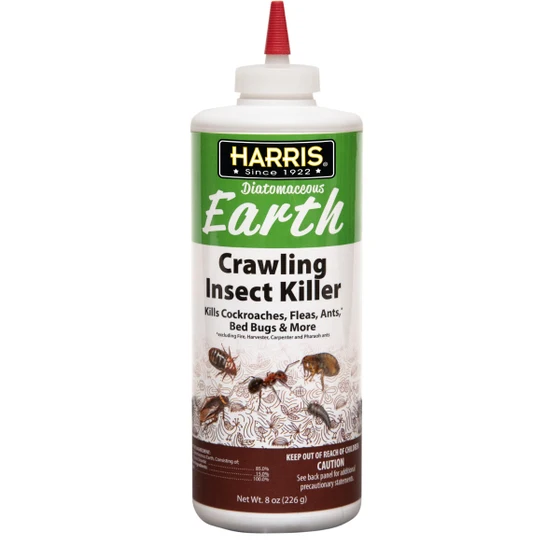
Harris Diatomaceous Earth Crawling Insect Killer is a ready-to-use 100% natural dust that targets crawling pests including ants, roaches, bed bugs, and fleas. Insects that contact or ingest the powder die within 48 hours when applied in cracks, crevices, and other hiding areas. Suitable for indoor and outdoor use with a powder duster included for easy application.
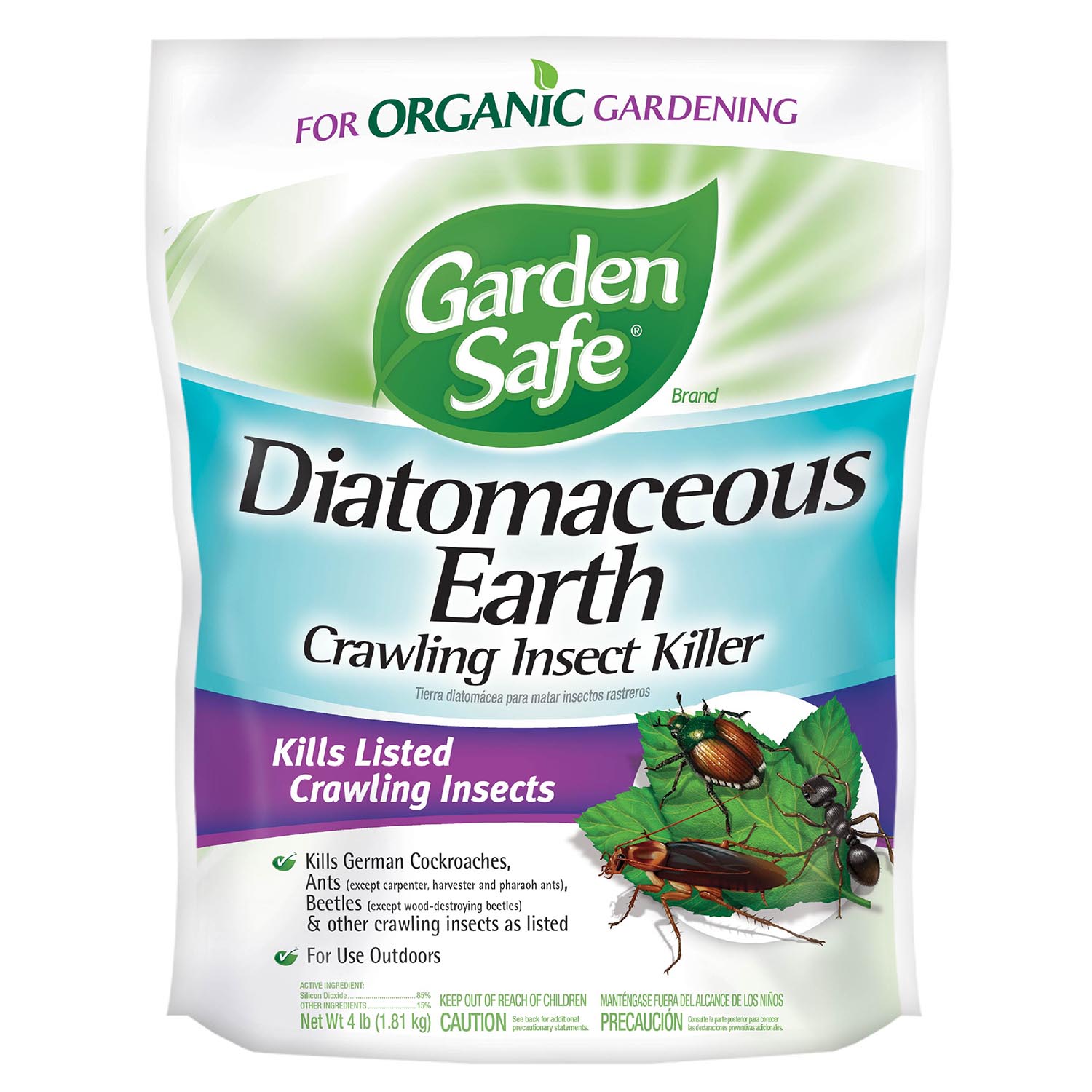
Garden Safe diatomaceous earth-based crawling insect killer provides organic, long-lasting control for listed pests. It kills German cockroaches, ants, beetles, fleas, mealybugs, and other crawling insects by contact by coating their exoskeletons and drying them out. Apply a thin powdery layer outdoors on plants and surrounding soil, and use indoors for crawling insect control as directed.
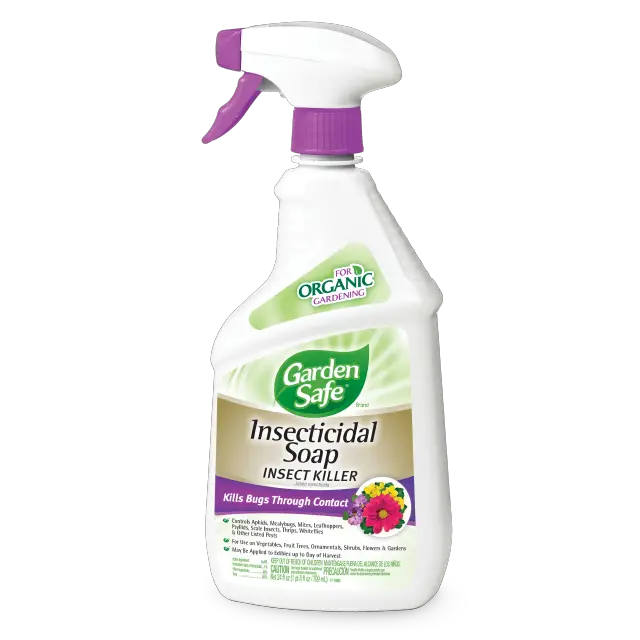
Garden Safe insecticidal soap is a ready-to-use contact spray that kills listed garden pests when sprayed directly on them. It’s formulated for organic gardening and can be used on vegetables, fruit trees, ornamentals, shrubs, flowers, and in indoor, outdoor, and greenhouse applications. For convenience, it may be applied to edibles up to and including the day of harvest.
Why Clover Mites Invade in Spring and Fall
Clover mites are outdoor plant feeders that feed on grasses, clover, dandelion, ornamental plants, and more than 200 other plant species. They reproduce by parthenogenesis (females reproduce without mating) and lay eggs in protected locations including bark crevices, between shingles, and in the dry soil near the foundation. Two distinct population peaks drive the movement patterns that create indoor invasions.
In spring, eggs that overwintered in protected locations hatch as temperatures warm, and the resulting population disperses from overwintering sites across the property. When the dispersal route crosses the building exterior, mites move up walls and into gaps around windows and foundations in large numbers. The second peak occurs in fall, when the generation produced over summer seeks overwintering sites, again crossing building exteriors in large movements. Hot, dry summer conditions that stress the lawn and garden reduce feeding success and push mites toward buildings faster.
Controlling Clover Mites Outdoors
Outdoor treatment addresses the source population and reduces the pressure on the building exterior. A perimeter treatment with a liquid insecticide or miticide applied to the foundation, exterior walls up to about two feet, and the adjacent turf band of approximately six to ten feet out from the foundation is the most effective outdoor intervention during an active invasion. Bifenthrin, permethrin, and cyfluthrin are the synthetic options registered for this type of perimeter use. Pyrethrin-based products are an organic alternative with faster degradation and lower residual.
Creating a vegetation-free barrier of gravel, mulch, or bare soil two to three feet wide around the building foundation removes the feeding habitat and moist plant cover that concentrates clover mites adjacent to the structure. This physical barrier is the single most effective long-term prevention measure because it eliminates the conditions that concentrate the outdoor population near entry points. Avoid dense, lush turf and heavy plantings of clover and low-growing ornamentals immediately against the foundation, as these provide ideal feeding and overwintering habitat.
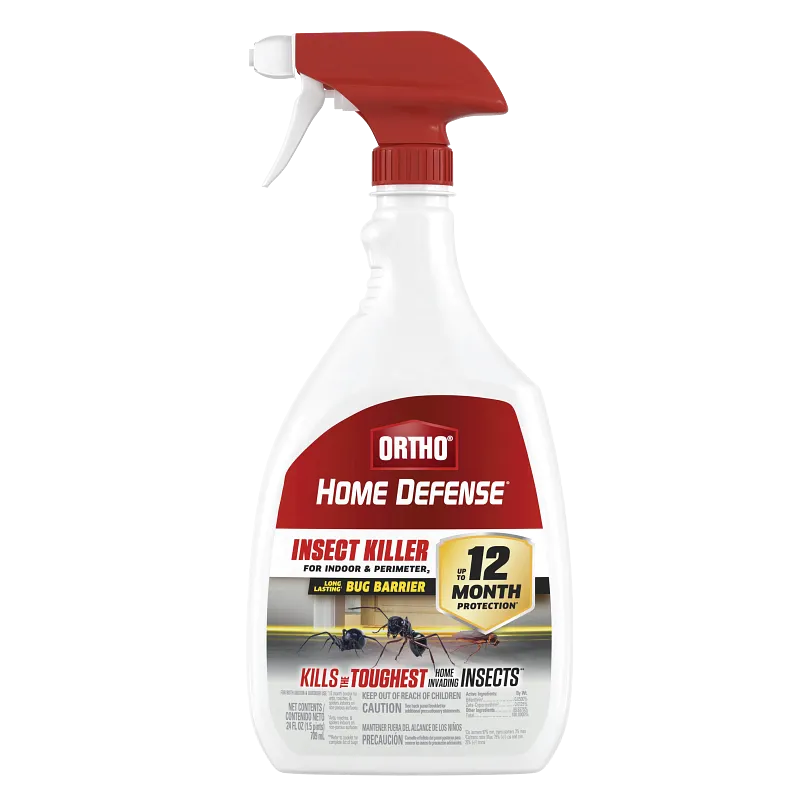
Ortho Home Defense Backyard Mosquito and Bug Killer Area Fogger helps control horse flies, deer flies, mosquitoes and other listed backyard pests. It provides up to 12-month protection indoors on non-porous surfaces and can be used to create a perimeter barrier outdoors. The ready-to-use trigger sprayer applies a clear, fast-drying, no-fumes formula for convenient spot or barrier treatment.
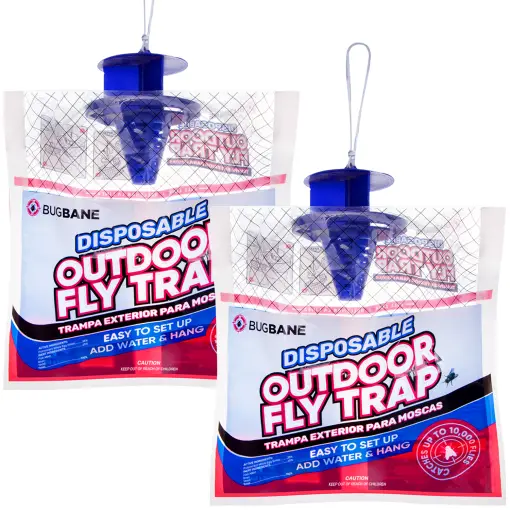
Discreetly draw flies away from your home with disposable outdoor hanging fly trap bags. The non-toxic bait is safe for kids and pets, activates with water, and attracts filth flies quickly using odor plus a visual lure. Hang the trap about 20 feet from your home, then dispose in outdoor trash for easy cleanup.
Preventing Entry into the Home
Clover mites enter through any gap large enough to accommodate their small body: gaps around window frames, weep holes in brick veneer, gaps under door thresholds, utility penetrations, and gaps in siding joints. Sealing these entry points with caulk, weatherstripping, and appropriate filler materials is the most durable long-term solution. This work is most effective when completed in late summer before the fall migration begins.
Window screens in good repair with tight-fitting frames stop most entry through window openings. Check for gaps where screen frames meet the window sill, as these are common entry points that are not addressed by a screen alone.
Removing Clover Mites Found Indoors
The critical rule for removing clover mites indoors is to never crush them. The reddish body fluid produces a stain on fabric, wallpaper, and painted surfaces that is difficult to remove and becomes permanent once it sets. The appropriate removal methods are vacuuming with a crevice tool along window sills and entry points, picking up individual mites with tape, or wiping surfaces with a damp cloth using a blotting rather than wiping motion. Vacuum bags should be disposed of immediately to prevent mites from escaping the vacuum.
Indoor chemical treatment is not appropriate or necessary for clover mites. The indoor population is not reproducing, will not establish, and will die naturally within a few days. Applying pesticide sprays to interior window sills and wall surfaces creates a residue hazard without meaningfully accelerating the resolution of the problem.
Long-Term Prevention Strategy
The combination of a vegetation-free foundation strip, sealed entry points, and a spring perimeter treatment in areas with recurring pressure is the most reliable long-term management program for clover mites. Properties with dense foundation plantings of grass, clover, or low-growing ornamentals and older construction with numerous small gaps in siding and window framing are the highest-risk settings and benefit most from the physical modifications. Maintaining a lean, low-water turf in the foundation zone, avoiding nitrogen-rich fertilization that produces the dense, lush growth clover mites prefer, and keeping gutters clear to avoid the moist conditions that support mite overwintering sites all reduce the baseline population adjacent to the building.